


Define the Trims Around the Sweater Construction
Zipper and accessory assembly supports half-zip sweaters, zip-front styles, button cardigans and other knitwear requiring attached components. For apparel brands, private label buyers and wholesale importers, these details affect opening shape, usability, appearance and packing.
Before sampling, we review the trim specification alongside the yarn, knit structure and garment measurements. Zipper length, button dimensions, attachment positions and opening construction need confirmation.
A reference garment can explain the intended result, but purchasing instructions must identify the actual component required. Alternative trims should be reviewed before they are used in samples or bulk production.
Select Zippers That Suit the Knitted Opening
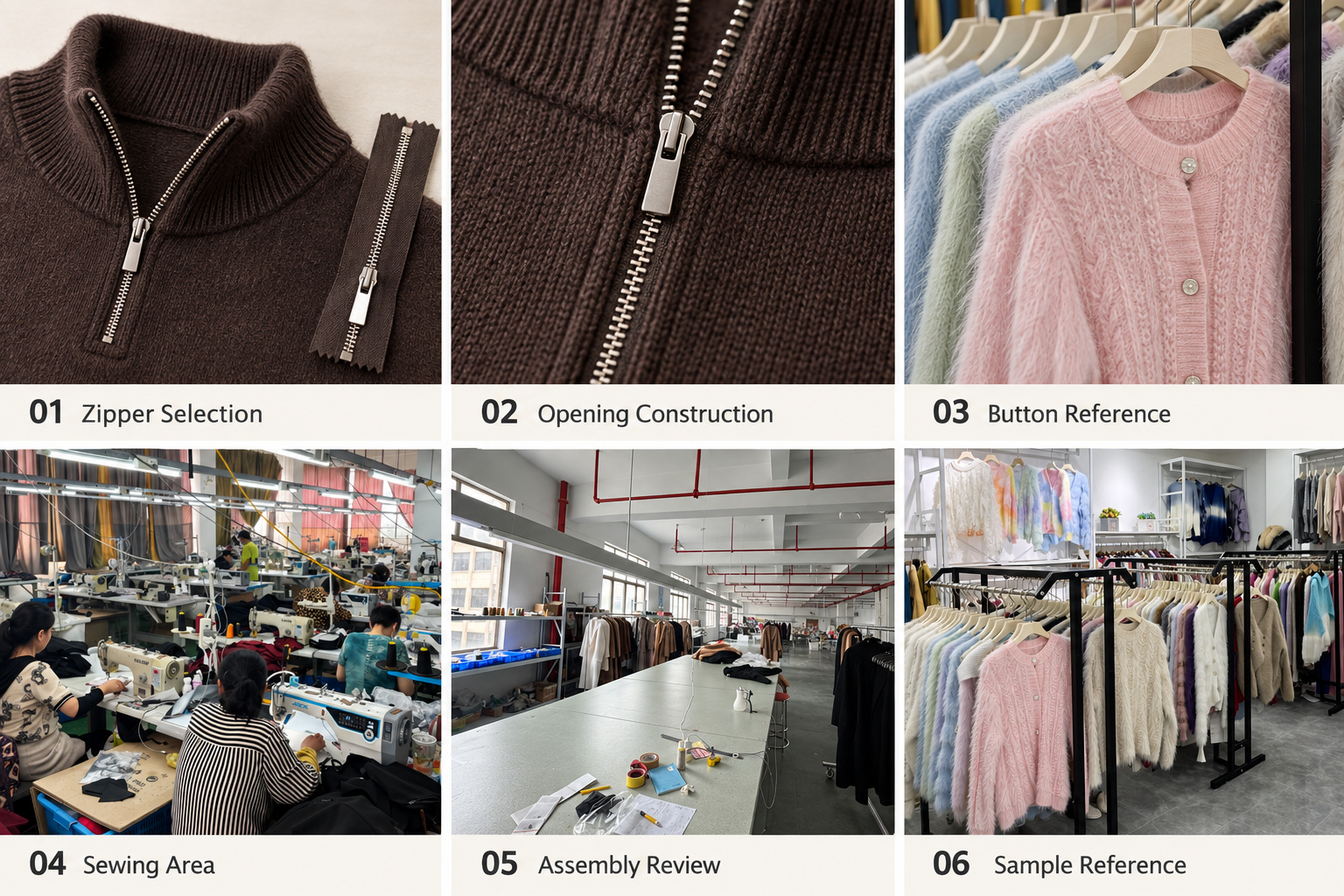
Zipper selection includes the required opening type, length, tape color, teeth appearance and puller design. These choices need to suit the garment weight and the construction of the front opening.
A lightweight knit may react differently to zipper tape than a substantial ribbed structure. We review how the component sits against the fabric and whether the opening needs additional support.
Standard available components and custom pullers follow different sourcing arrangements. Custom tooling, colors or branding may affect minimum quantities, cost and material readiness. Feasibility is confirmed against the specific request.
 Attach Components Without Distorting the Knit
During assembly, the zipper and garment opening need to align without unintended stretching or gathering. Uneven feeding can produce a wavy front edge or change the way the neckline sits.
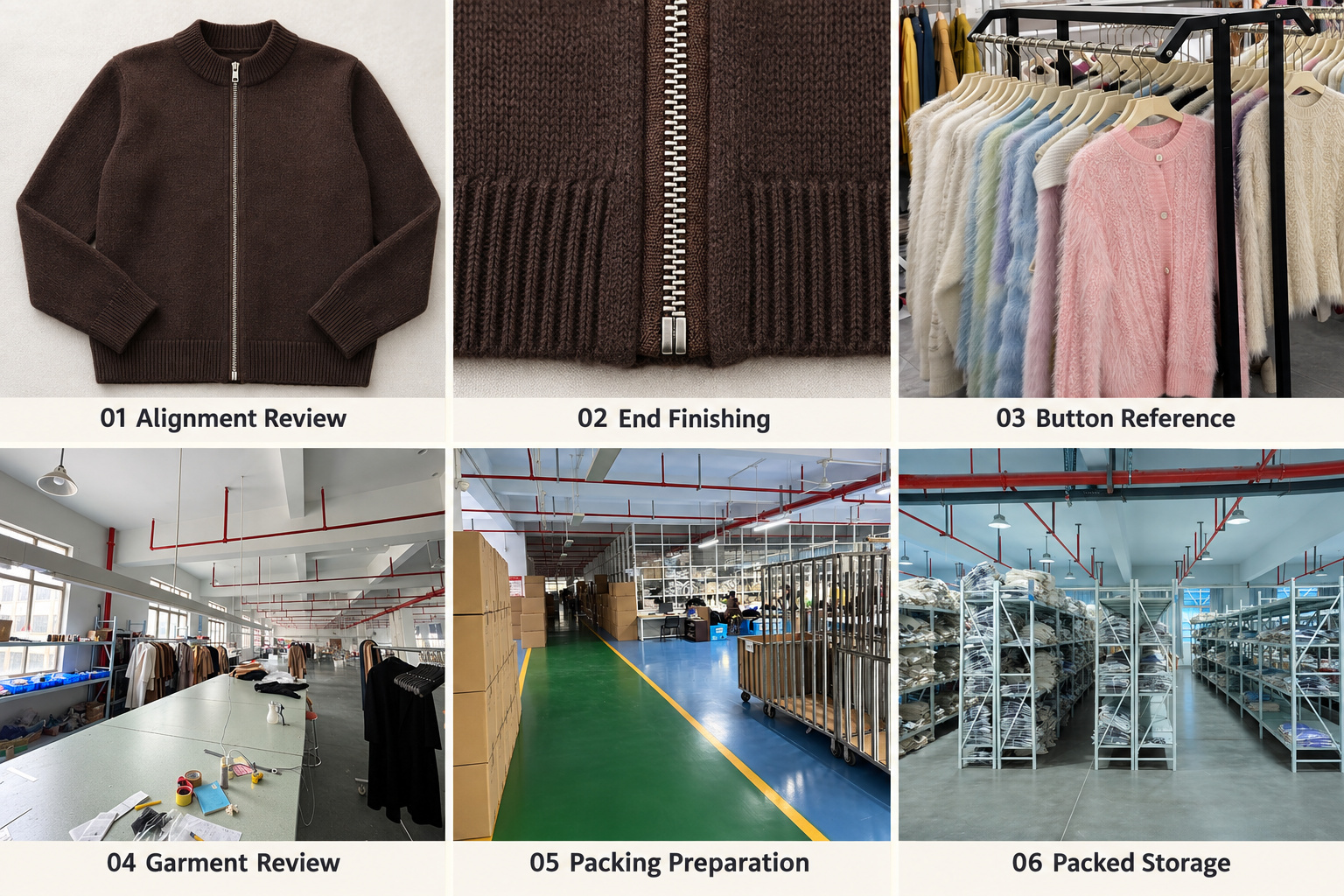
We review attachment position, stitching appearance and the finish at both zipper ends. Zip-front styles also require attention to the relationship between the opening, collar and hem.
The adjoining construction follows the confirmed panel linking and sewing requirements. A change in zipper length or opening structure may require another sample before bulk assembly proceeds.
Confirm Buttons and Other Attachments
For button cardigans, button placement and buttonhole construction must work together. Spacing, opening size and the appearance of the closed placket are reviewed against the approved sample.
Attachment needs to suit the knitted fabric without creating excessive pulling or visible distortion. Decorative components are assessed according to their position, weight and attachment method.
Any branded trim requires confirmed artwork and a component sample where necessary. Our logo and branding work helps coordinate these details with the garment’s other brand elements.
Review Function and Appearance After Finishing
Zippers are checked for smooth opening and closing, alignment and visible attachment faults. Button checks consider placement, attachment condition and compatibility with the corresponding openings.
Assessment also follows the agreed washing and garment finishing treatment. The garment and its trims need to remain compatible with that process.
Specific durability tests or attachment-strength requirements should be agreed before production. Routine appearance and function checks do not replace a defined testing requirement.
 Plan Sampling, Sourcing and Packing
Trim approval should take place early enough to allow sourcing before bulk production. MOQ may be influenced by component purchasing minimums, particularly for custom colors, branded pullers or unusual buttons.
For a quotation, provide garment references, quantities by style and color, zipper or button specifications, branding requests and your delivery target. Include any required test methods and packing instructions.
Sample fitting confirms how the components work on the actual knit. Before packing, we also review folding and protection requirements to reduce snagging, pressure marks or contact between hard trims and the knitted surface during shipment.