


Translate the Approved Design into Knitting Requirements
Our sweater knitting process supports apparel brands, private label buyers and wholesale importers moving an approved design into bulk production. The knitting stage establishes the garment’s stitch structure, panel shape, pattern placement and much of its finished appearance.
Before knitting begins, we review the confirmed yarn, construction details, measurements and reference sample. Crew neck sweaters, cardigans, turtlenecks and other styles require different panel shapes and neckline arrangements. Instructions must identify which details are knitted into the panels and which are completed during assembly.
Unresolved design changes can affect yarn consumption, knitting time and the production schedule.
Match Gauge, Yarn and Stitch Structure
Machine gauge is selected together with the yarn and intended fabric effect. A finer gauge does not automatically produce a better sweater; the combination needs to suit the requested weight, coverage, texture and construction.
Plain knit, rib, cable and patterned structures behave differently. Dense cables may draw the fabric inward, while more open constructions can affect coverage and dimensional stability. We review these characteristics through development swatches and samples.
The yarn preparation and selection stage helps establish a suitable material direction before knitting settings are finalized. Changing yarn thickness or the number of ends may require further sampling.
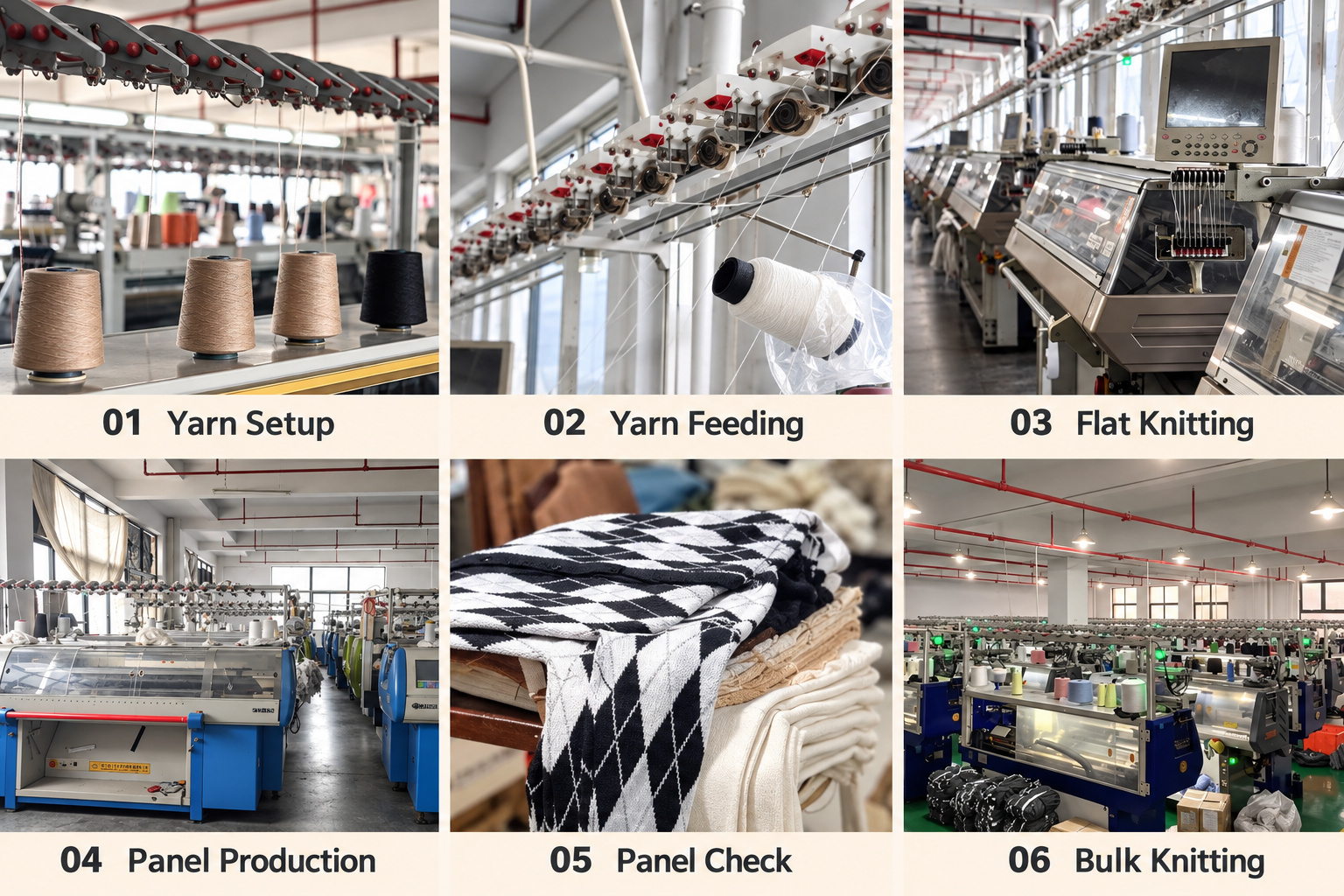 Develop Patterns and Panel Shapes
Knitting instructions need to account for body panels, sleeves, neckline shaping and the required edge construction. For stripes, jacquard and intarsia, the repeat size and placement must be checked against the garment proportions.
A design that looks balanced on a drawing may need adjustment when translated into stitches. Small lettering, narrow lines and detailed motifs can lose definition depending on the yarn and gauge.
Through knit pattern development, we review these limitations before the design becomes the bulk production reference. Pattern changes should be confirmed on knitted material rather than through digital artwork alone.
Check Early Panels Before Continuing the Order
Early knitted panels are reviewed against the approved construction. Checks focus on stitch appearance, panel dimensions, shaping, pattern alignment and visible faults such as dropped stitches, holes or inconsistent knitting.
Dimensions at this stage need to be understood alongside the finishing process. An unfinished panel should not be compared directly with a finished garment measurement without considering the expected dimensional change.
Issues identified during initial checks should be resolved before more panels are produced. Replacement panels must remain compatible with the yarn shade and construction of the corresponding garment sections.
Maintain Consistency Across Bulk Knitting
Bulk knitting requires consistent material identification and confirmed settings. Yarn changes, different lots or adjustments made during production can affect appearance and need review.
Panels should remain organized by style, color, size and garment section. This reduces mixing before panel linking and sewing and helps investigate problems found during assembly.
For patterned sweaters, checks also consider whether adjoining sections align as intended. The inspection reference must reflect the approved sample and agreed specifications.
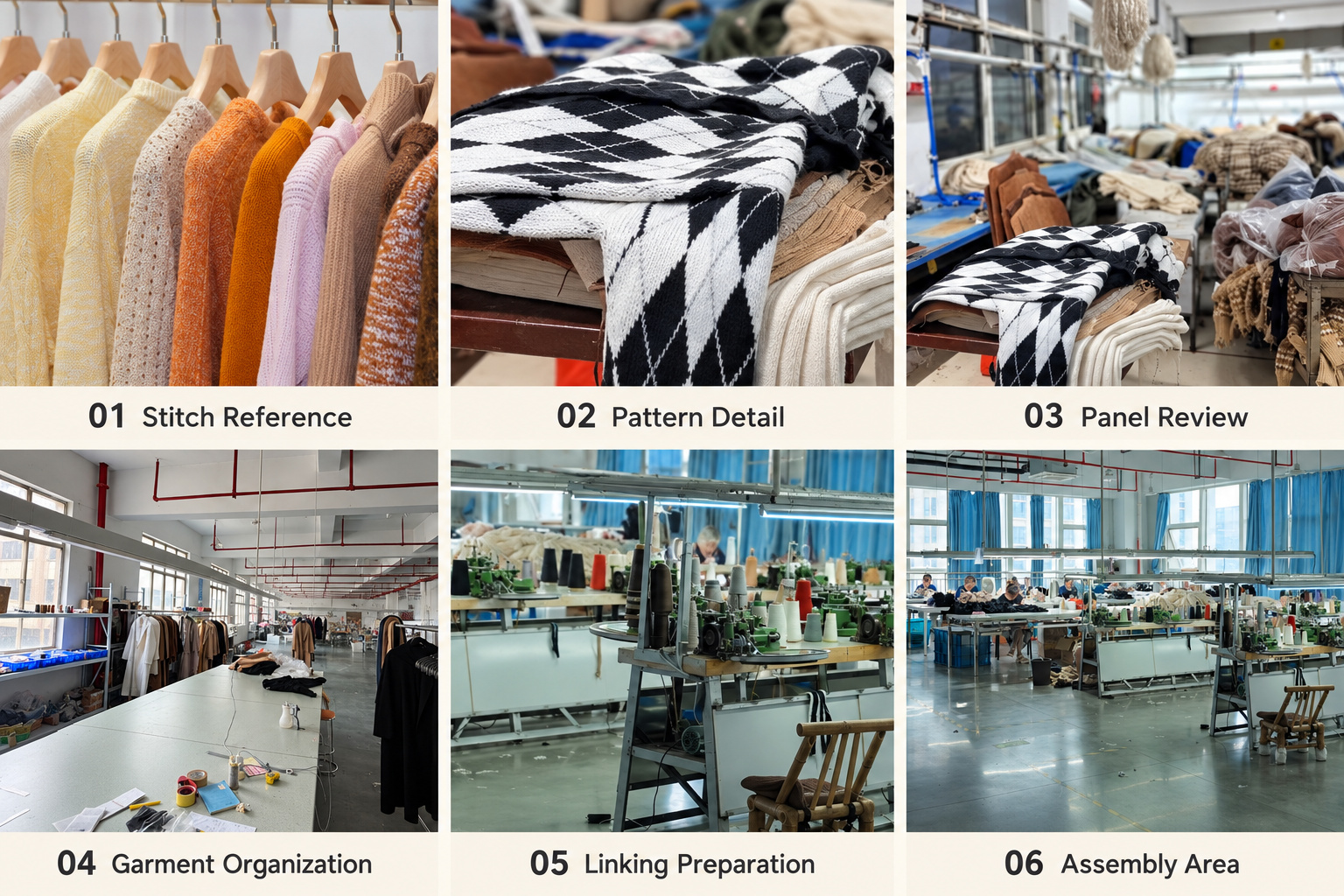 Plan Cost and Timing Around the Construction
Knitting time varies with garment size, stitch density, pattern complexity, yarn behavior and order quantity. Complex cables, multiple colors and frequent style changes can require more production time than a straightforward plain-knit order.
For a quotation, provide reference images or a technical pack, yarn direction, stitch requirements, quantities by color and size, and your delivery target. We can then review sampling needs and knitting feasibility before confirming the bulk schedule.
Finishing, inspection and packing must also be included when planning the complete order timeline.