

Choose Materials Against the Product Brief
Knitvella Sweater supports apparel brands, private-label buyers, importers and wholesalers with yarn selection for OEM sweater production. Options include cotton, wool, cashmere, acrylic, viscose, polyester, nylon and blends, subject to sourcing availability and the approved construction.
Material selection starts with the intended garment, target composition, hand feel, weight, care expectations and budget. A fine-gauge cardigan and a heavier cable sweater require different yarn planning. Buyers can provide a technical pack, physical reference or material direction so we can review suitable options before sampling.
Define Composition and Hand Feel Separately
Fiber composition is a specification; hand feel is an assessment of the finished material. Two yarns with the same stated composition can produce different results because of yarn construction, thickness, knitting and finishing.
For cashmere and cashmere-blend programs, the required fiber percentages must be confirmed. A soft reference sample should not be treated as proof of cashmere content. Where buyers require composition verification or performance testing, arrangements can be coordinated for the relevant material or product.
 Match Yarn to Gauge and Stitch Structure
Typical gauge planning covers 3G, 5G, 7G, 9G, 12G and 14G, depending on the yarn, stitch structure and machine configuration. Gauge alone does not establish garment weight or quality.
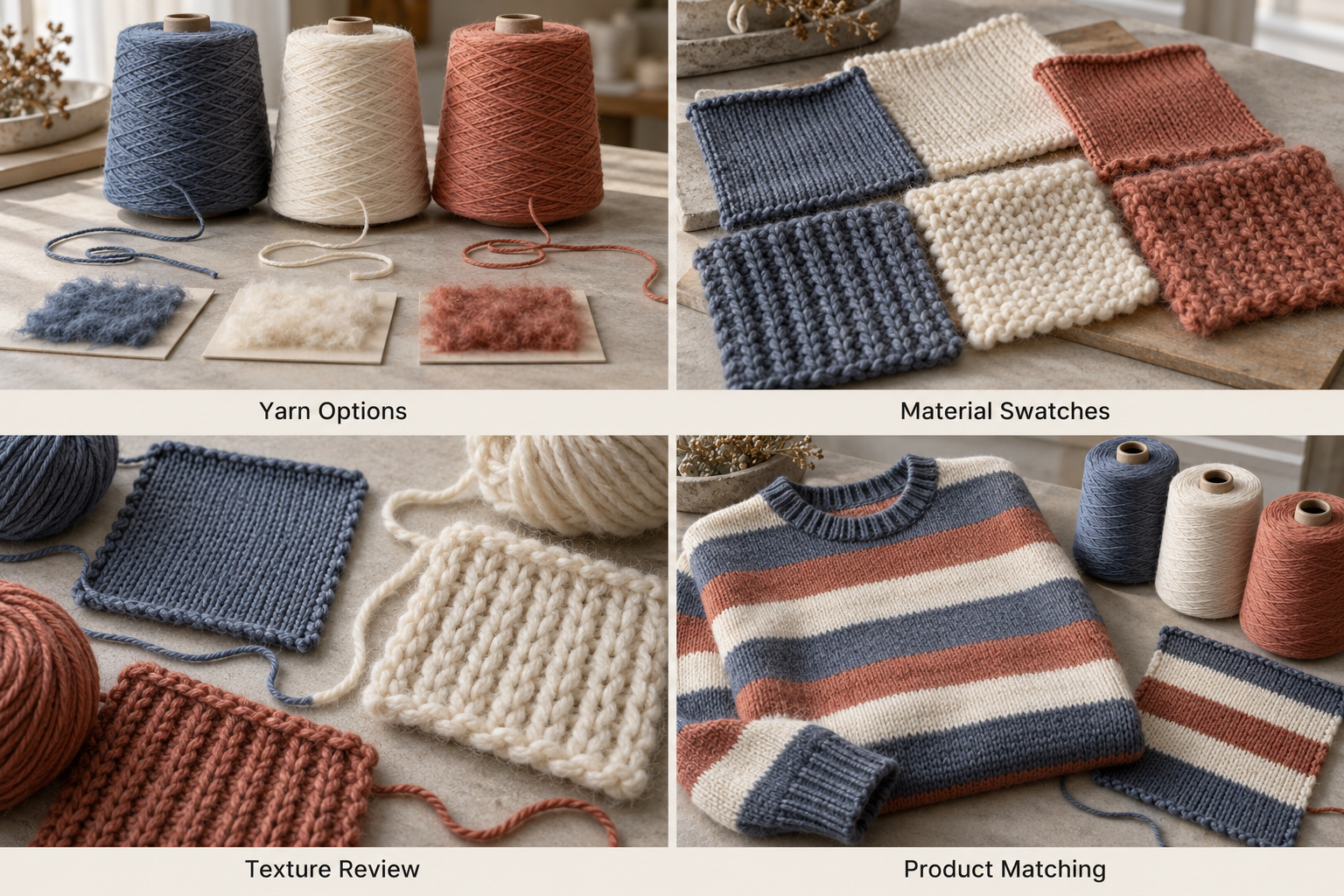
Yarn thickness and knitted density affect coverage, drape and stitch definition. Cable, rib, jacquard and intarsia constructions also need material review. Through knit structure and detail customization, we assess the proposed combination before confirming the development direction. A knitted swatch helps buyers compare texture and appearance more accurately than a yarn cone alone.
Review Color Availability and Sourcing Conditions
Available yarn shades can simplify material planning. Custom-dyed colors may involve a separate yarn minimum and additional development time. Buyers should identify the required colors and estimated quantity per color early in the project.
Our color and pattern customization review establishes the color reference and approval requirements. For repeat orders, previous material specifications and color references are reviewed against current availability; an earlier purchase does not guarantee that the same yarn batch remains available.
Approve the Material in a Finished Sample
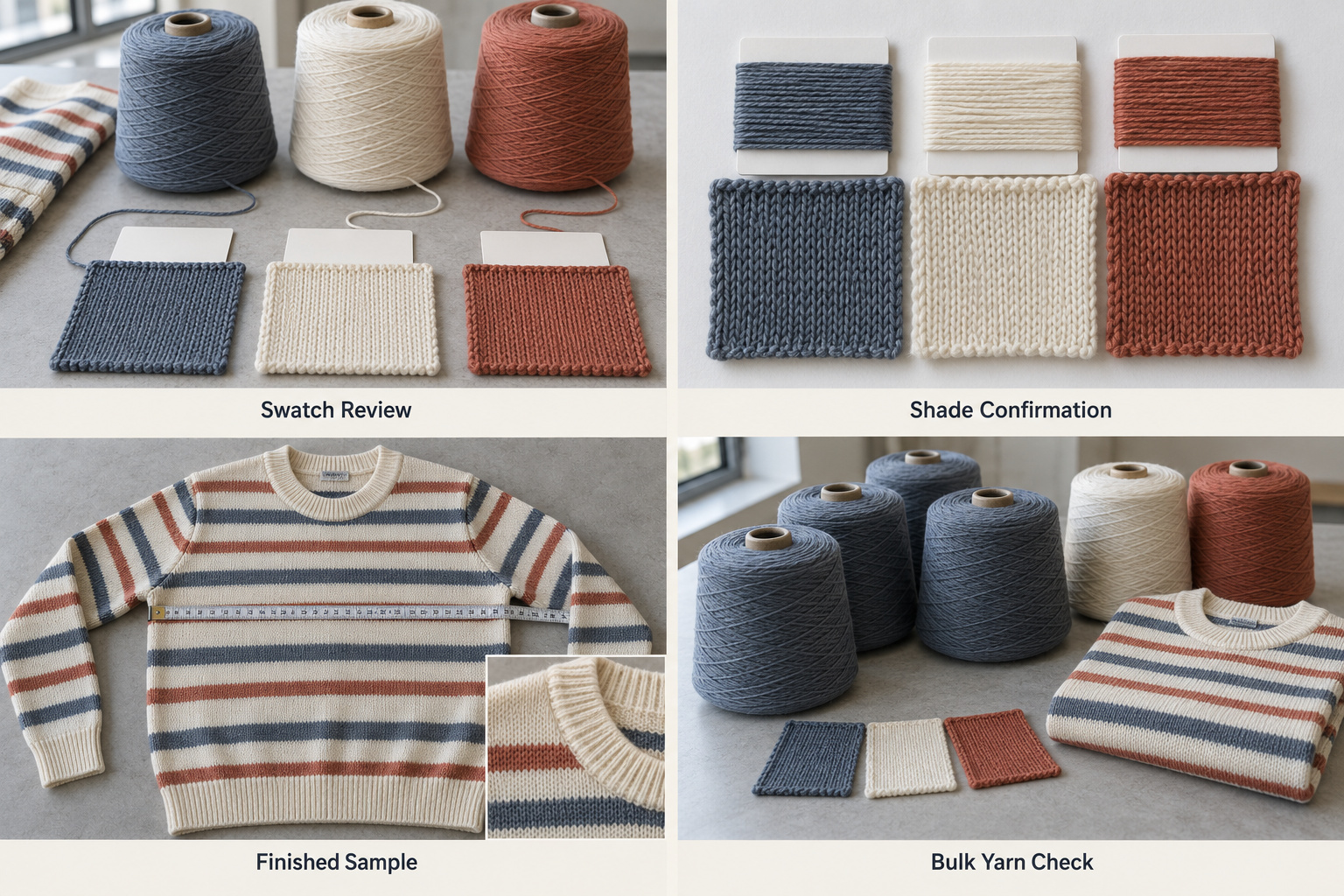
A yarn or swatch approval should be followed by garment review where fit, hand feel or appearance is important. Washing and finishing can change the knitted dimensions and feel, so the sample should represent the intended finishing direction.
During sample development, buyers review the combined result of yarn, gauge, construction and finishing. Standard custom samples usually require about 7–12 days; special yarn or more involved development may take around 10–15 days. Final timing depends on material availability and project requirements.
 Confirm Cost, MOQ and Bulk Requirements
Yarn price, garment weight, color requirements and sourcing minimums affect the quotation. Standard OEM orders are typically around 300–500 pieces per style and color. Custom-dyed yarn, special materials or complex constructions may require higher quantities.
Before production, the approved material specification and permitted substitutions should be clear. Any proposed material change needs review for its effect on appearance, cost, care labeling and delivery. Incoming yarn is checked against the confirmed order requirements before knitting.
Send Your Material Requirements
Please provide the sweater style, target composition, hand-feel reference, gauge if known, colors, quantity breakdown and shipment target. Include any testing, care-label or packaging requirements so material selection can be reviewed alongside the complete order.