


Define Packing Requirements Before Production
Knitvella Sweater supports apparel brands, importers, wholesalers and retail purchasing teams with packaging preparation for bulk sweater orders. Options include individual polybags, printed or recycled-material polybags, hangtags, barcodes, inner packing, master cartons and buyer-specific carton marks.
Packing instructions should be reviewed before materials are ordered. A clear specification establishes how each sweater is folded, identified, bagged and assigned to a carton. This helps connect the finished garment with the buyer’s receiving, warehouse and retail preparation requirements.
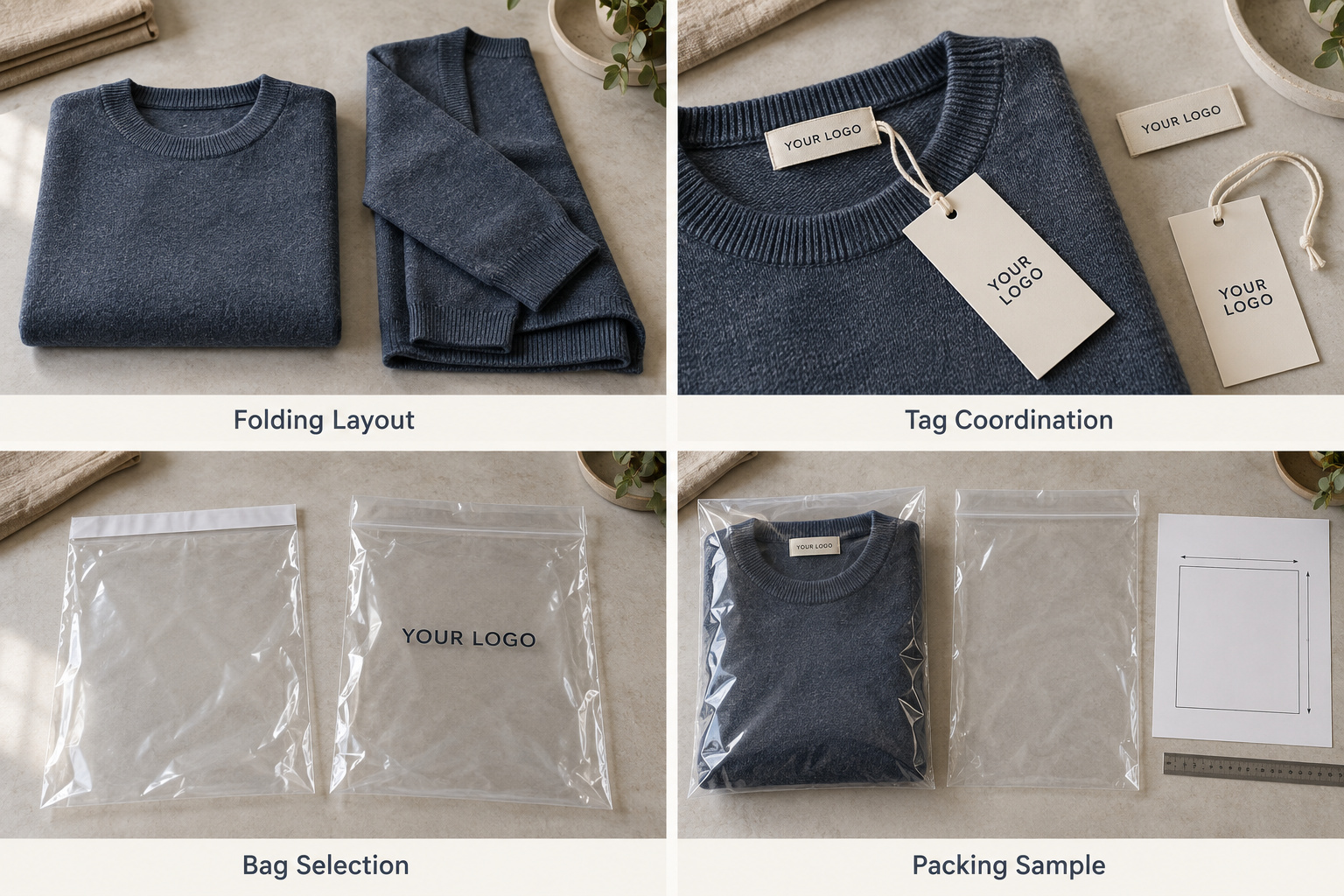
Match Folding and Bag Size to the Garment
Sweater thickness, dimensions and construction affect the folded size. A fine-gauge pullover and a chunky cable-knit style may need different bag dimensions and carton arrangements. Cardigan buttons, half-zip closures and attached hangtags also need consideration during folding.
We review the proposed fold against the actual sample rather than choosing packaging from garment dimensions alone. Individual bags should accommodate the finished sweater without excessive compression. Buyers should specify any required presentation, closure method or additional protection for garment details.
 Coordinate Labels, Hangtags and Product Identification
Main labels, size labels, care labels and hangtags need to match the approved product information. Where identification changes by style, color or size, the packing instructions should clearly show the corresponding files.
Through labels and hangtags, buyers can confirm wording, attachment and product matching before bagging. Barcode data and placement also require approval. Any scanning checks, sticker positions or buyer-specific identification requirements should be agreed before bulk preparation.
Confirm Bag Artwork and Material Requirements
Printed polybags require approved artwork, dimensions, print colors and placement. Buyers should also identify any required wording or handling information. The final layout needs review on the selected bag format, especially where folds or closures affect visibility.
Recycled-material polybags can be discussed according to sourcing availability and the requested specification. Any recycled-content claim or supporting documentation needs confirmation for the actual material supplied. A packaging option should not be presented as certified solely because it uses a particular appearance or label.
Establish Size Assortments and Carton Layouts
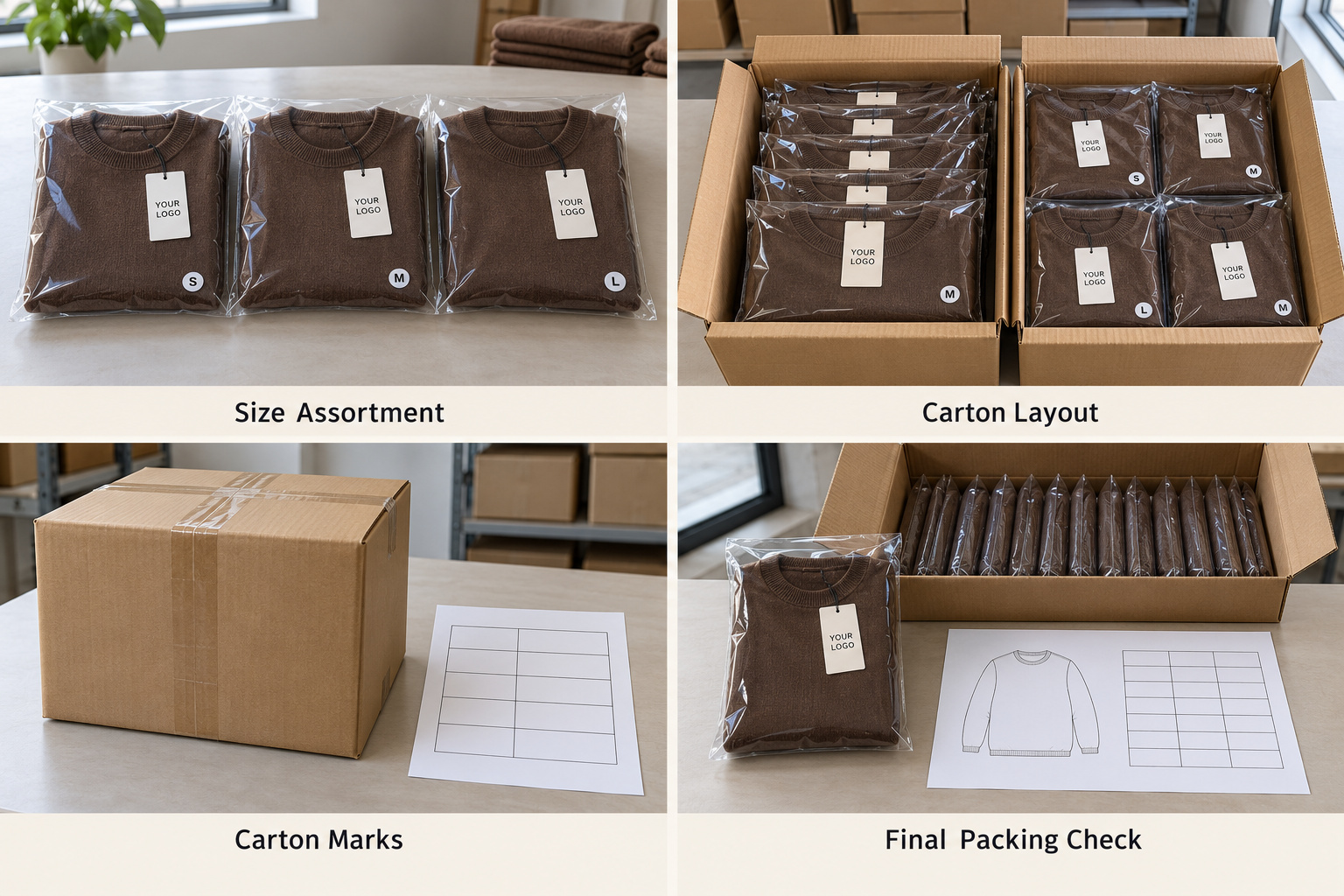
Carton planning starts with quantities by style, color and size. Buyers should specify whether cartons contain a single variation or a mixed assortment, together with any inner-packing requirements.
Carton dimensions and packed weight are confirmed against the finished garments and packing arrangement. Carton marks should follow the approved buyer format. Our packing and export preparation process connects these instructions with quantity checks and shipment preparation.
 Approve Packing Samples and Check Bulk Orders
A packing sample allows buyers to review folding, tag attachment, bag fit, identification and presentation together. Required revisions should be consolidated into one current packing instruction before bulk application.
Final checks cover garment size, labels, hangtags, bagging, carton assortments and quantities. Packaging costs and sourcing minimums depend on material, dimensions, printing and the number of variations. Late changes can affect purchasing and shipment timing, so packing approval should be included in the production schedule.
Send Your Packaging Instructions
Please provide folding references, bag specifications, artwork, label files, quantities by variation, carton assortment requirements and destination details. Include your shipment target and preferred trade term so we can review packaging costs and export preparation alongside the sweater order.