

Match Yarn to the Garment Specification
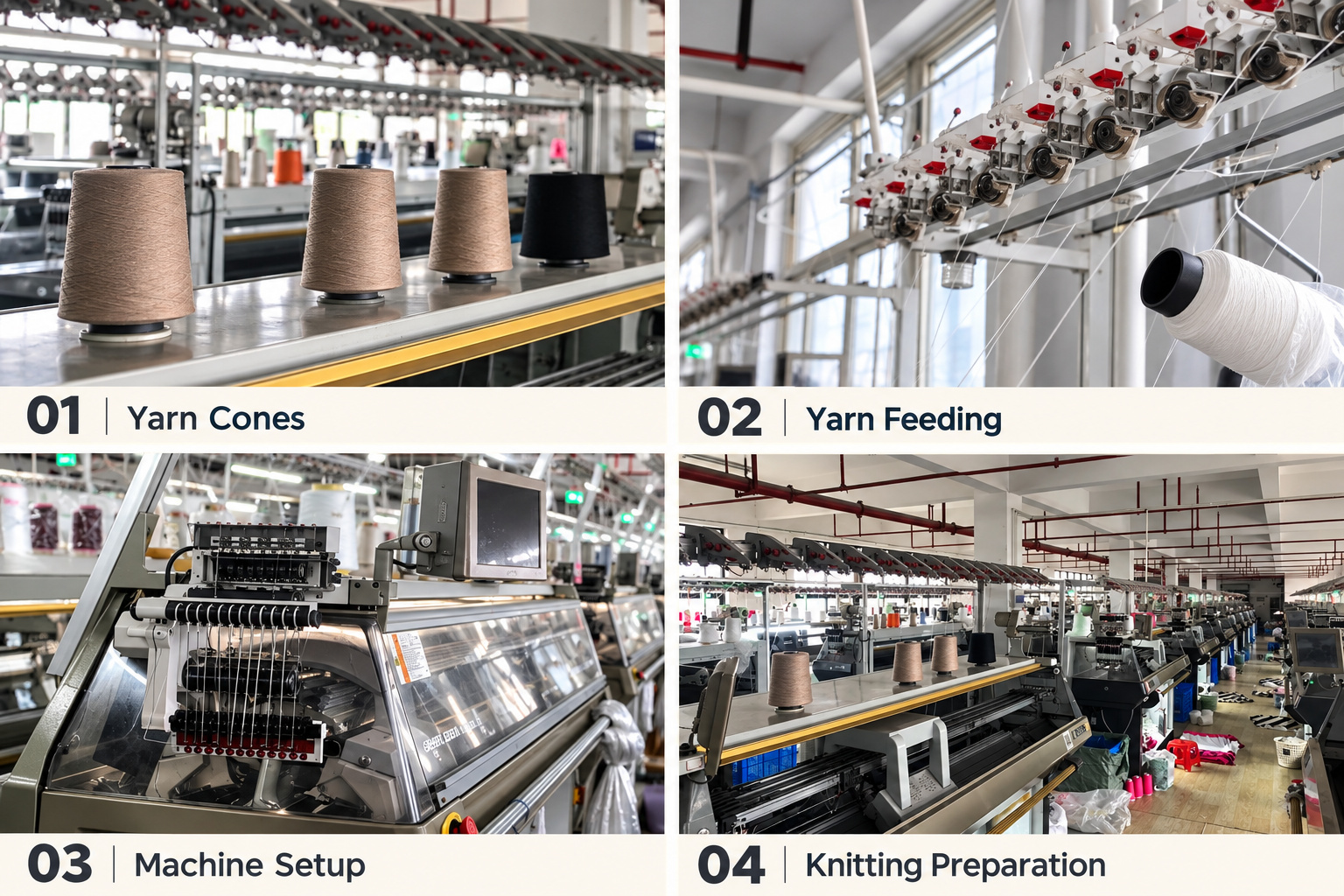
Yarn preparation and selection connect your sweater design with the materials needed for sampling and bulk production. For apparel brands, private label buyers and wholesale importers, the starting point is the intended garment: its weight, texture, knit structure, fit and target cost.
We review your technical pack or reference sample alongside the requested fiber composition. Cotton, wool, cashmere, acrylic, viscose, polyester, nylon and blended yarn directions can be considered according to the style. The final choice depends on availability and suitability for the construction.
A similar-looking yarn may behave differently during knitting and finishing. Material substitutions therefore need buyer confirmation before development proceeds.
Review Yarn Count, Gauge and Construction
Yarn count and machine gauge must work together with the selected stitch structure. A fine, lightweight sweater needs a different approach from a substantial cable knit or a garment with firm rib sections.
We assess whether the proposed yarn can produce the required stitch definition, coverage and garment weight. Plied yarn or multiple ends may be considered where appropriate, but changes can affect consumption, texture and cost.
The knitting process provides the practical check. A development swatch helps identify whether the proposed combination needs adjustment before a complete sample is made.
 Confirm Shades and Finished Swatches
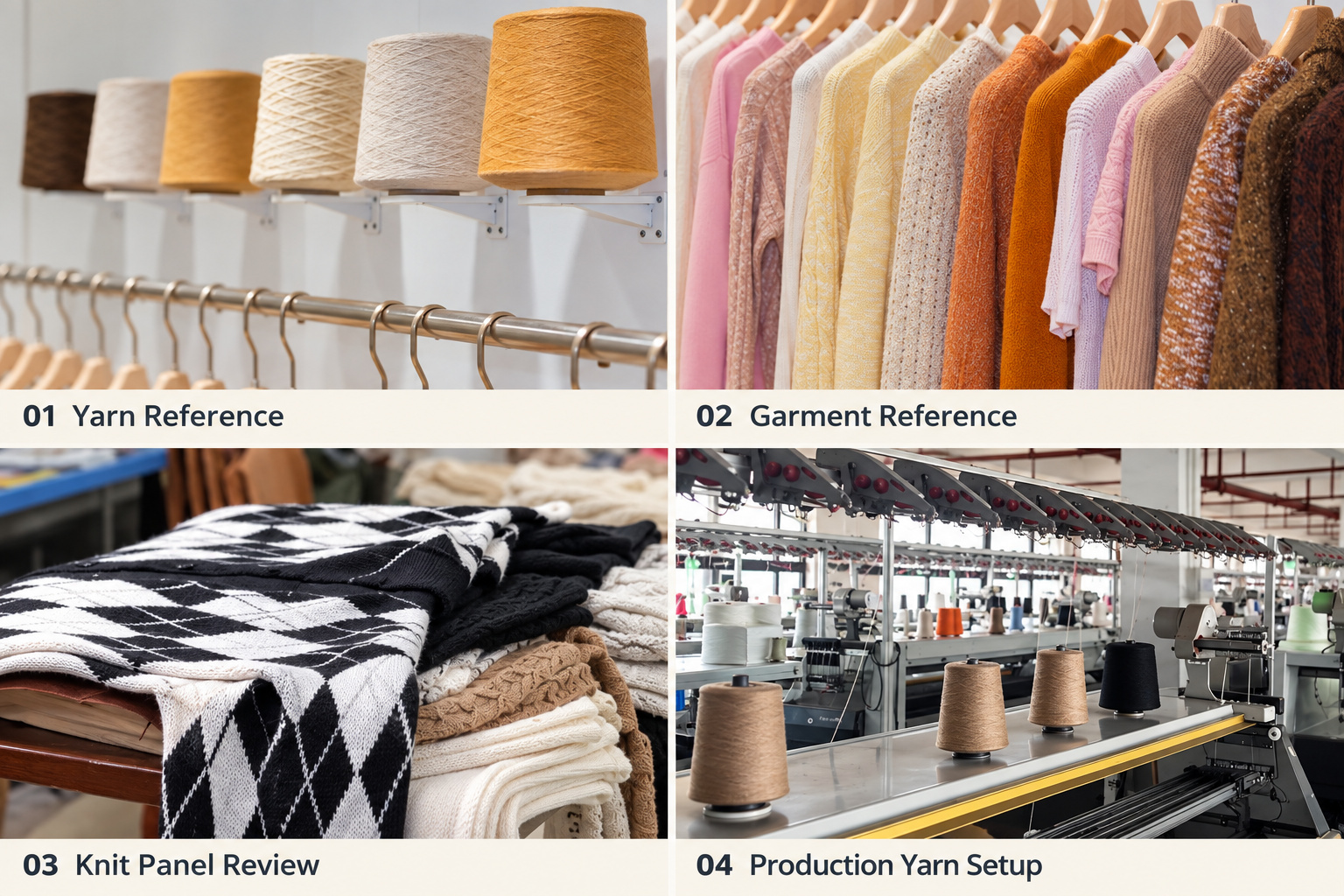
Color confirmation should use an agreed physical reference wherever possible. Screen images help communicate direction, but they are insufficient for final shade approval.
Available yarn shades and custom-dyed requirements follow different purchasing schedules. For stripes, jacquard and intarsia, we also review how the selected colors appear together in the actual knit.
Swatches should receive the intended finishing treatment before assessment. Buyers can then review hand feel, stitch appearance and dimensional changes. Our yarn and material selection page explains the material choices behind this review.
Fiber composition must be supported by the agreed material specification or relevant verification, rather than inferred from appearance.
Prepare Bulk Yarn Against the Approved Reference
Once the sample and material specification are confirmed, bulk yarn requirements are reviewed against order quantities, size distribution and expected consumption. Complex patterns and heavier constructions can change material usage.
Incoming checks focus on the agreed yarn identification, shade or lot references, package condition and visible inconsistencies. Yarn lots should remain identifiable during production so shade differences can be investigated.
Storage and handling also matter. Yarn needs protection from contamination and unsuitable conditions before it reaches the knitting stage. Potential shortages or substitutions must be resolved before they disrupt the order.
 Understand MOQ and Scheduling Factors
Yarn purchasing minimums can influence the garment MOQ, particularly for custom shades, special blends or materials unavailable from stock. Available-yarn styles generally offer more scheduling flexibility.
Sampling time includes material sourcing as well as knitting and finishing. A yarn change after approval may require another swatch or garment sample through sample development.
For a quotation, provide your preferred composition, garment reference, knit direction, color requirements, quantities by style and color, and delivery target. If the yarn specification is open, include your target garment weight and cost range so we can review suitable options before confirming the production plan.