

Check Finished Sweaters Against Approved References
Knitvella Sweater checks finished measurements and appearance against the approved specification and sample for OEM, private-label and wholesale orders. This stage helps identify differences in garment dimensions, shape, shade, knit structure and workmanship before packing.
Buyers should confirm the measurement chart, tolerances, color reference and appearance requirements before bulk production. Reference photographs can support the review, but they do not replace defined measurements or an approved garment sample.
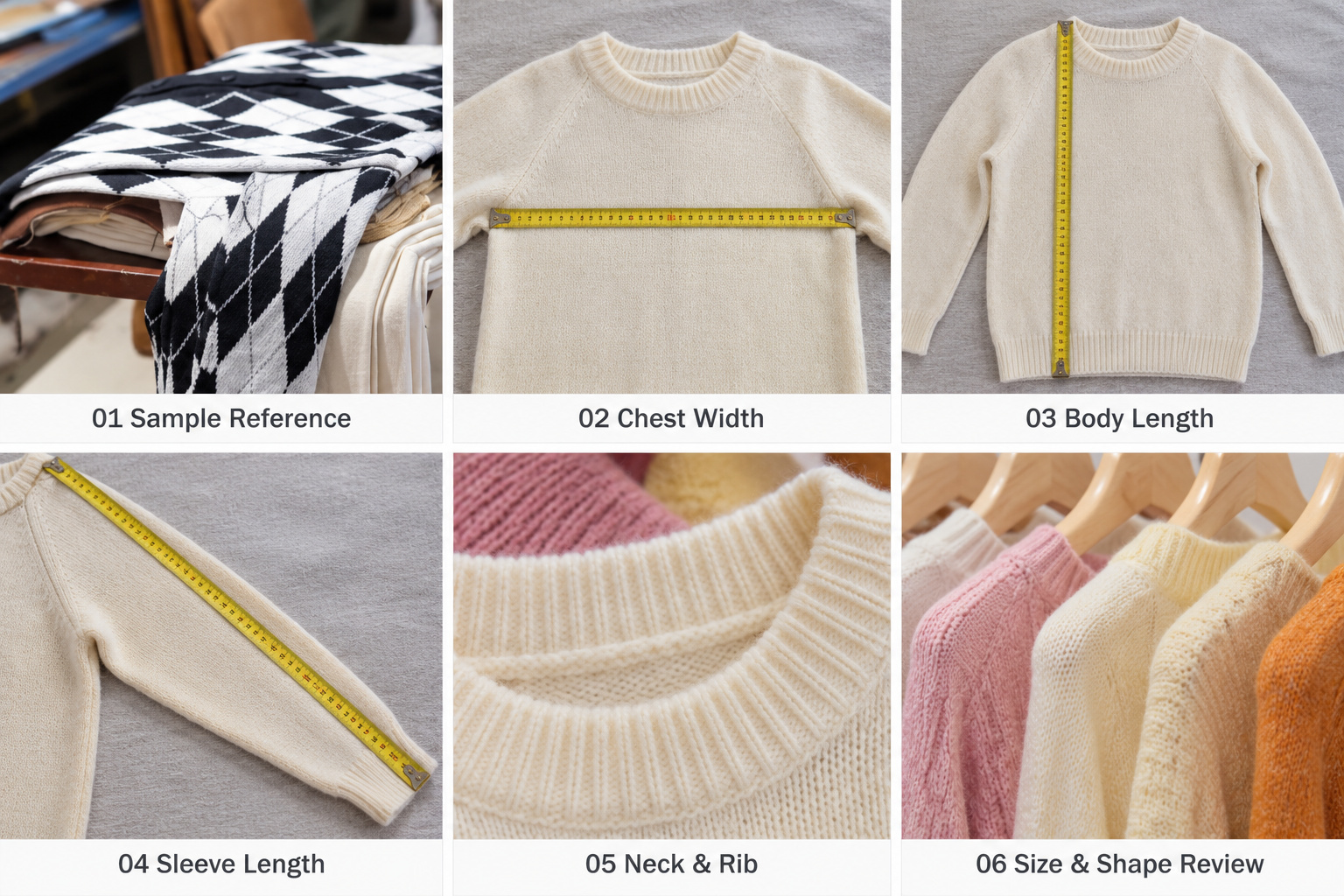
Define Measurement Points and Tolerances
A usable measurement chart explains both the required dimensions and how each point is measured. Depending on the style, checks may cover chest width, body length, shoulder width, sleeve length, armhole, neckline, cuff and hem.
Measurement methods should remain consistent between sample approval and bulk inspection. Whether a rib opening is measured relaxed or stretched, for example, can change the result. Our size and fit customization process establishes these references alongside grading requirements.
Tolerances must be agreed for the garment and measurement point. One general allowance should not automatically be applied to every dimension.
Measure After Washing and Finishing
Knitted panels and unfinished garments do not necessarily retain the same dimensions after washing, drying, shaping and pressing. Yarn behavior and knit construction can affect relaxation, body proportions and finished hand feel.
Measurements are therefore checked after the appropriate finishing stages, with garments laid flat and measured without unnecessary stretching. Differences are reviewed against the approved sample and agreed tolerances. Our washing and garment finishing process provides the context for these checks.
Production measurement checking does not replace a specified wash-performance test. Where buyers require dimensional-change testing, the method, conditions and acceptance criteria need separate confirmation.
 Review Shape, Shade and Knit Appearance
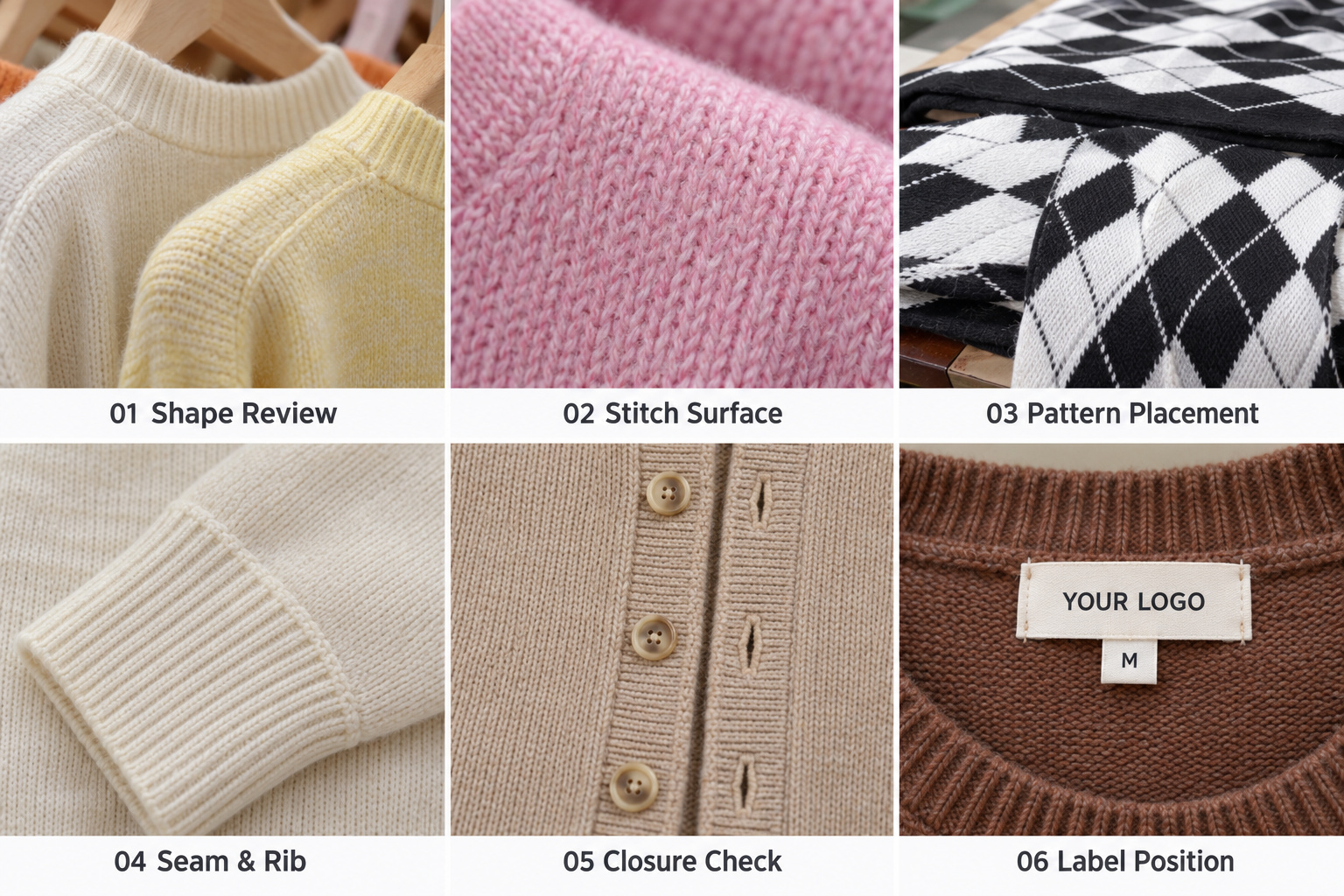
Appearance checking covers garment symmetry, neckline shape, sleeve alignment and the way the body and hem sit when laid flat. Inspectors also review visible holes, missed stitches, uneven knitting, loose threads and distorted seams.
Cable patterns require attention to definition and placement. Jacquard and intarsia designs are compared with the approved artwork and knitted reference. Shade is reviewed under consistent lighting, including differences between body panels, sleeves, ribs and garments within the order.
Cashmere and other soft-yarn programs are assessed against the agreed surface appearance. Visual review alone cannot verify fiber composition or predict pilling performance.
Check Closures, Branding and Labels
Cardigans are reviewed for placket alignment, button spacing and closure position. Half-zip sweaters require attention to collar shape, zipper installation and surrounding fabric distortion.
Embroidery and knitted logos are checked for placement, proportions and visible workmanship. Main labels, size labels and care labels are compared with approved files and garment specifications. These checks connect the finished garment with its size identification and packing requirements.
 Resolve Differences Before Packing
When a measurement or appearance issue is identified, the affected garments are reviewed to determine whether correction is appropriate and whether related pieces need further checking. Revised garments should be checked again before release.
Requirements outside the agreed specification need buyer confirmation rather than an unapproved production change. These checks form part of our wider quality inspection process.
Send your measurement chart, tolerances, approved sample reference and appearance criteria early so inspection requirements can be included in sampling, production planning and the shipment schedule.