

Define the Order Before Production
Our sweater manufacturing process supports apparel brands, private label buyers and wholesale importers developing OEM bulk orders. Production starts with a clear specification: yarn composition, knit structure, measurements, colors, garment details, branding and packing requirements.
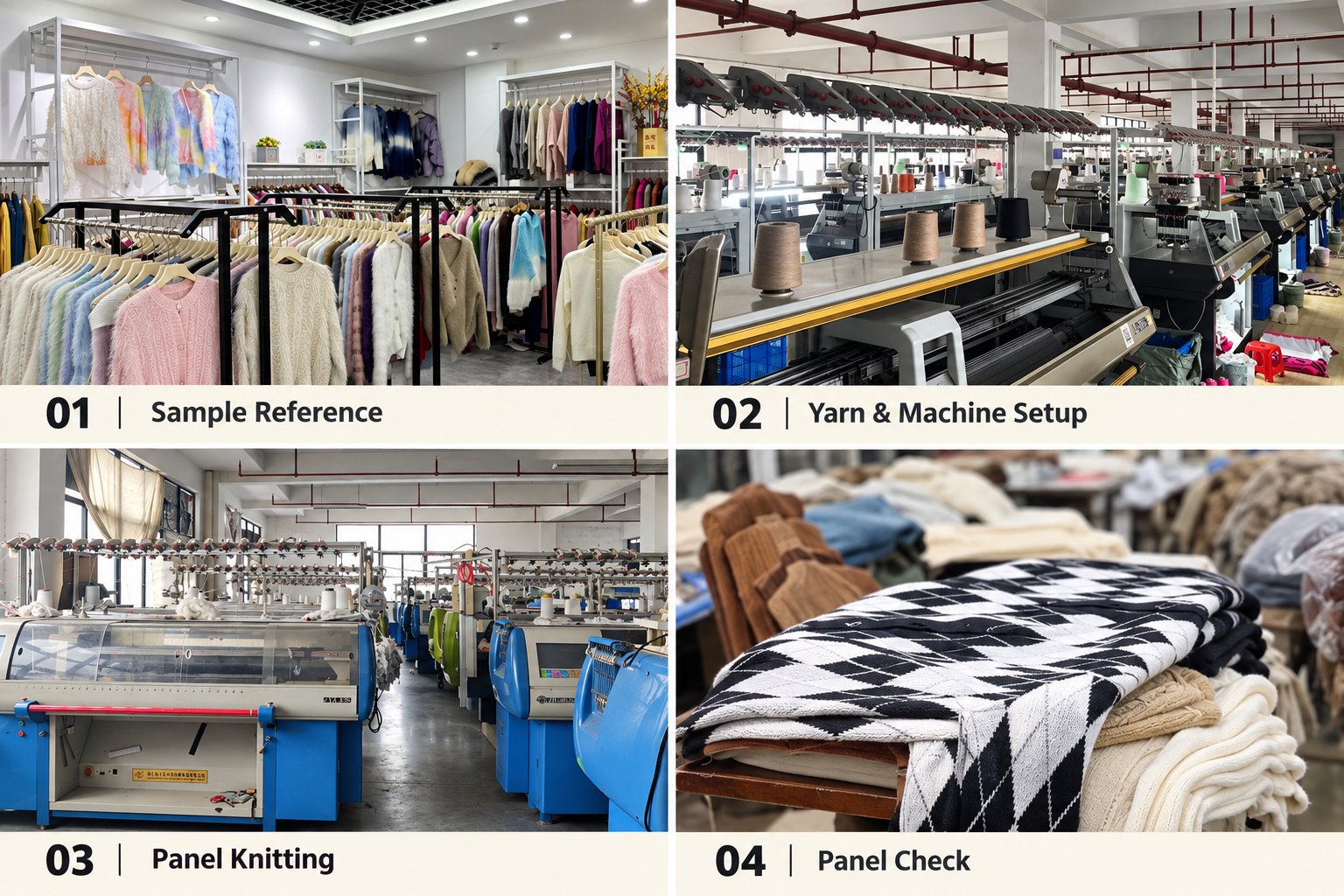
A reference garment helps communicate the intended result, but it does not replace written specifications. We review differences between the reference, technical drawings and measurement sheet before sampling. Order quantity by style, color and size also needs confirmation because it affects yarn purchasing and production scheduling.
Prepare Yarn and Confirm the Knit Direction
Yarn selection affects garment weight, hand feel, stitch definition and finishing behavior. Cotton, wool, cashmere and blended yarn directions are reviewed against the requested construction and target cost. Availability must be checked before confirming the schedule.
During yarn preparation and selection, we review the selected yarn, shade reference and suitability for the intended knit. Custom dyeing or special yarn sourcing may require additional time and minimum quantities.
Knitted swatches help buyers assess texture, pattern scale and color combinations before a complete garment sample is developed.
 Develop the Sample and Approve Specifications
The development sample brings together the yarn, construction and garment measurements. Buyers should review the sample after the intended finishing treatment, since washing and pressing can affect dimensions and appearance.
Comments need to identify the exact change required: neckline depth, sleeve length, rib width, pattern placement or garment weight. Our sample development work establishes a reference for bulk production.
Before production release, we confirm the approved sample and latest specifications. Changes made afterward require another review of cost, material availability and timing.
Knit Panels and Assemble the Garment
Knitting settings follow the approved construction. Early production panels are checked for stitch consistency, pattern alignment, visible yarn faults and dimensions before the order progresses.
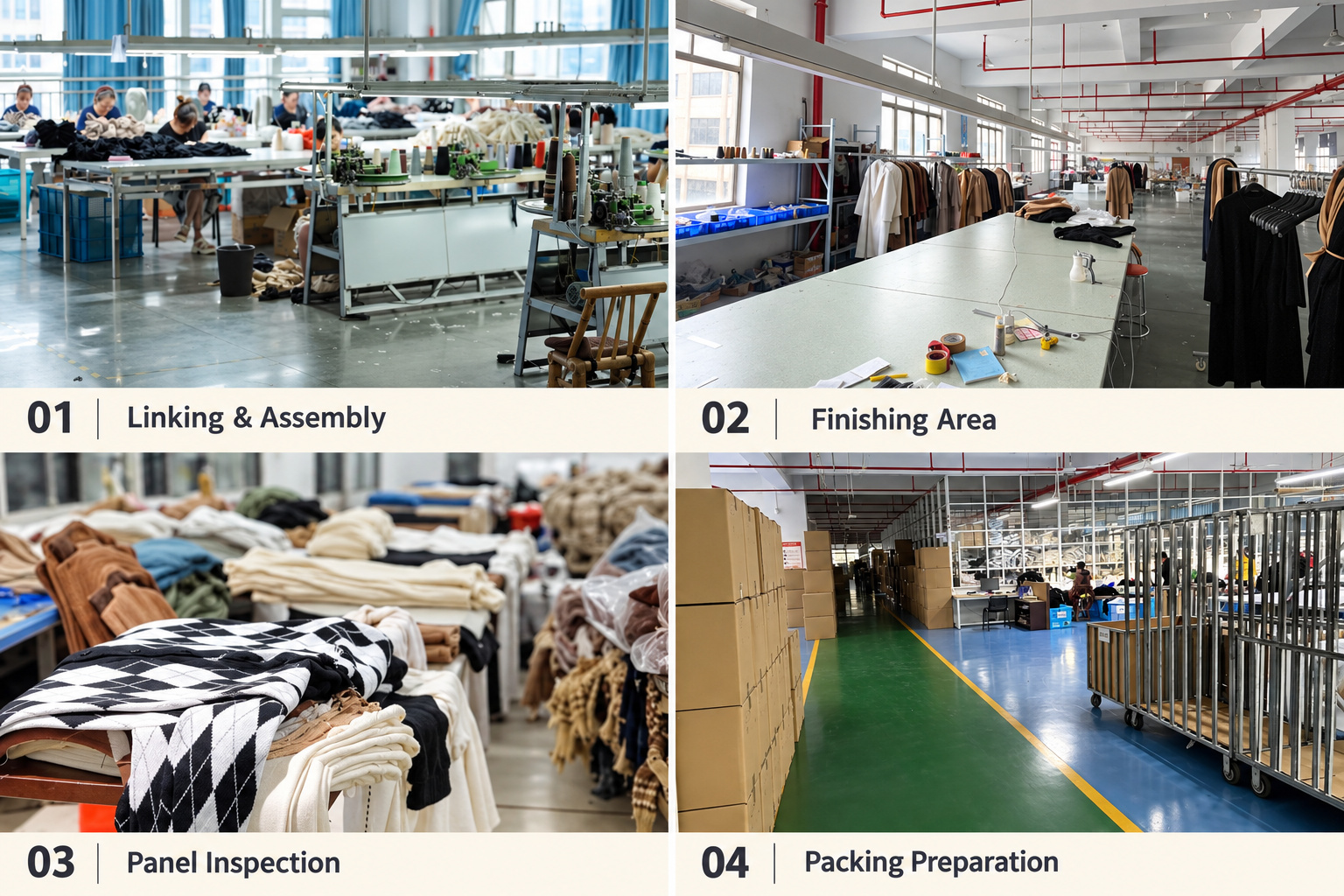
The panel linking and sewing stage joins the garment sections and completes the required seams. Necklines, shoulders, sleeves and armholes need particular attention because assembly affects fit and appearance.
Buttons, zippers and other trims are included where required by the style. Their position and attachment method must match the approved sample. Specialized work or peak-season requirements may involve qualified production partners.
Finish and Inspect Against the Approved Reference
Washing, garment finishing and pressing follow the agreed yarn and style requirements. These operations influence softness, shape, surface appearance and finished measurements.
Inspection covers the areas relevant to each order: key measurements, shade consistency, knit defects, seam appearance, trim attachment and branding placement. Checks should use the confirmed measurement points and tolerances.
Additional testing, needle detection or third-party inspection requirements should be discussed before production. The scope and timing of quality inspection need to be agreed rather than assumed.
 Confirm Packing and Delivery Timing
Finished sweaters are folded and packed according to the agreed instructions. Labels, hangtags, individual bags, size assortments and carton arrangements need confirmation before packing begins.
Bulk production usually takes 25–35 days for repeat orders or 35–45 days for new developments after approval. Complex styles and peak-season orders may require 45–60 days. The final schedule depends on yarn readiness, quantity, construction and inspection arrangements.
For a quotation, send your technical pack or reference images, material direction, quantities by color and size, branding details, packing requirements and destination. These details allow us to review feasibility and propose a production schedule suited to your order.