


Define the Edge Construction Before Sampling
Collar, cuff and hem finishing affects how a sweater fits, sits and retains its intended shape. For apparel brands, private label buyers and wholesale importers, these details need confirmation alongside the body construction before sampling.
We review neckline shape, collar height, cuff length, hem depth and the required rib structure against your technical pack or reference garment. The specification should distinguish between edges knitted as part of a panel and sections attached during assembly.
A firm rib finish and a relaxed edge create different silhouettes. Reference photographs help communicate direction, but the sample establishes the actual proportions and feel.
Match Rib Structure to the Garment
Rib construction needs to suit the yarn, gauge and adjoining fabric. Its width, stretch and recovery influence the neckline opening, sleeve finish and how the hem sits against the body.
A cuff that feels too tight can restrict the opening, while a loose hem may not provide the intended shape. Increasing rib depth can also change garment proportions and yarn consumption.
Through knit structure and detail customization, we review the proposed edge construction with the complete garment. Any additional yarn or elastic component requires confirmation rather than being assumed.
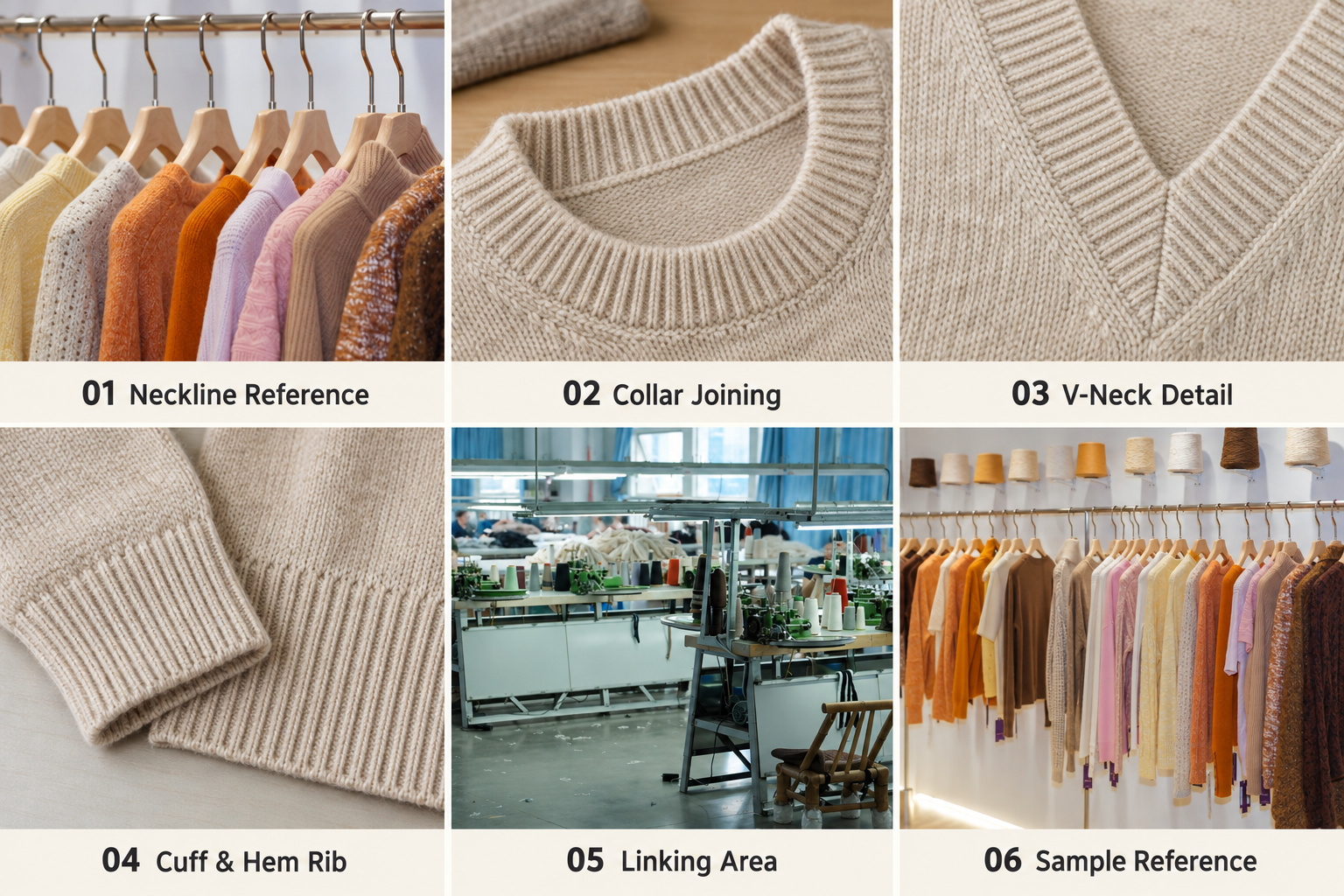 Control Collar Shape and Attachment
Crew necks, V-necks and turtlenecks require different finishing decisions. We review the opening dimensions, rib proportions and joining method against the approved sample.
For crew necks, attachment tension affects whether the collar lies evenly. V-neck construction requires attention to the point and the balance between both sides. Turtleneck height and opening need to work with the intended folded or unfolded appearance.
During panel linking and sewing, collar attachment should avoid missed loops, visible gaps, puckering or unnecessary bulk. Changes to collar construction may require another sample review.
Keep Cuffs and Hems Consistent
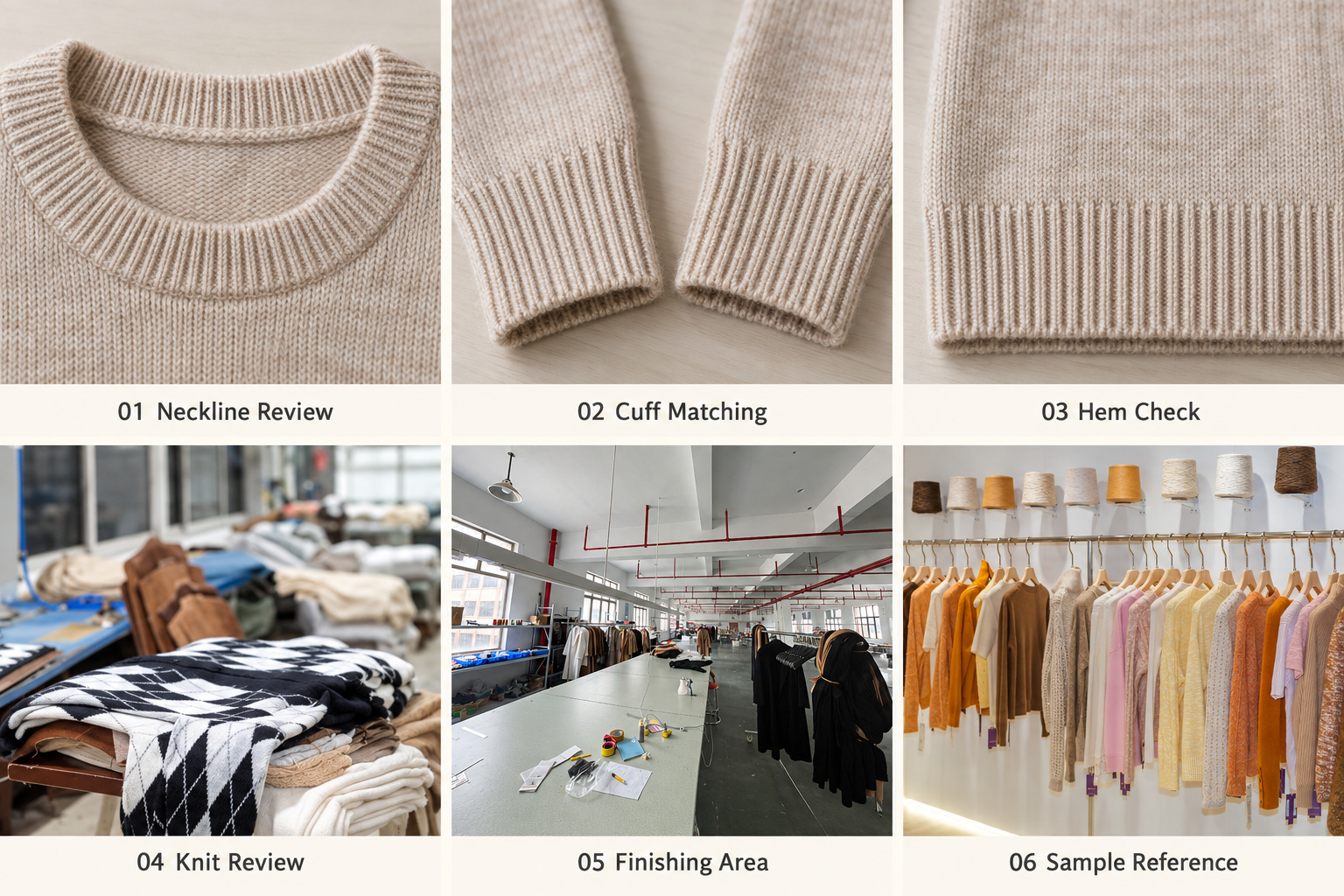
Cuffs should match in length, width and attachment appearance. Their joining points need to remain comfortable and visually consistent with the sleeve construction.
At the hem, checks consider edge evenness, side-seam alignment and the transition between the body knit and rib section. Split hems or shaped edges require separate instructions so the production reference is clear.
For patterned garments, the finishing arrangement must also account for where stripes or motifs meet the rib. These relationships should be resolved during development rather than adjusted without approval during bulk assembly.
Review the Garment After Finishing
Washing and pressing can affect rib dimensions, neckline shape and the relationship between the edges and body fabric. Final assessment therefore follows the agreed washing and garment finishing treatment.
Checks focus on collar symmetry, cuff matching, hem evenness, seam appearance and measurements at the specified points. Visible stretching, waviness or distortion needs review before packing.
The approved sample and measurement sheet should define the expected result. Photographs can document an issue, but they do not replace agreed measurement methods and tolerances.
 Confirm Details for Cost and Production Planning
For a quotation, send the garment reference, yarn direction, neckline style, rib dimensions and quantities by style and color. Identify any essential requirements for opening size, stretch, split hems or decorative edges.
Cost and timing depend on construction complexity, attachment operations, material availability and sampling revisions. Changing rib depth or collar shape can affect both fit and production requirements.
Before bulk approval, confirm these details together with the garment measurements, labels and folding instructions. Packing should preserve the agreed neckline and edge shape without unnecessary stretching or compression.