


Define the Finished Result During Sampling
Washing and garment finishing influence a sweater’s hand feel, dimensions, surface appearance and shape. For apparel brands, private label buyers and wholesale importers, the production reference needs to represent the garment after its agreed treatment.
We review the intended finish alongside the yarn composition, knit structure, trims and measurement sheet. A soft, relaxed appearance may require a different approach from a structured garment with defined ribs and cables.
Not every sweater requires the same washing treatment. The method is reviewed for the specific construction, and specialized requirements may involve qualified production partners.
Match Treatment to Yarn and Construction
Yarns respond differently to moisture, movement, heat and drying. Wool, cotton, cashmere and blended constructions therefore need treatment decisions suited to their material specifications.
During development, we review whether the proposed treatment changes the fabric density, softness, stitch definition or garment dimensions. Patterned sweaters also require attention to the interaction between colors.
The yarn preparation and selection stage provides the material basis for this review. A yarn substitution can change finishing behavior and may require another sample assessment before bulk production.
Check Samples After the Intended Treatment
The development sample should receive the intended finishing treatment before final fit and appearance approval. An unfinished garment can give a misleading impression of the result expected from bulk production.
We review body measurements, sleeve proportions, neckline shape and the relationship between the body fabric and rib sections. Buyer comments should refer to this finished sample and identify specific adjustments.
Where required, changes are reviewed through sample development. Treatment adjustments should not be used to conceal an unsuitable panel shape or assembly problem.
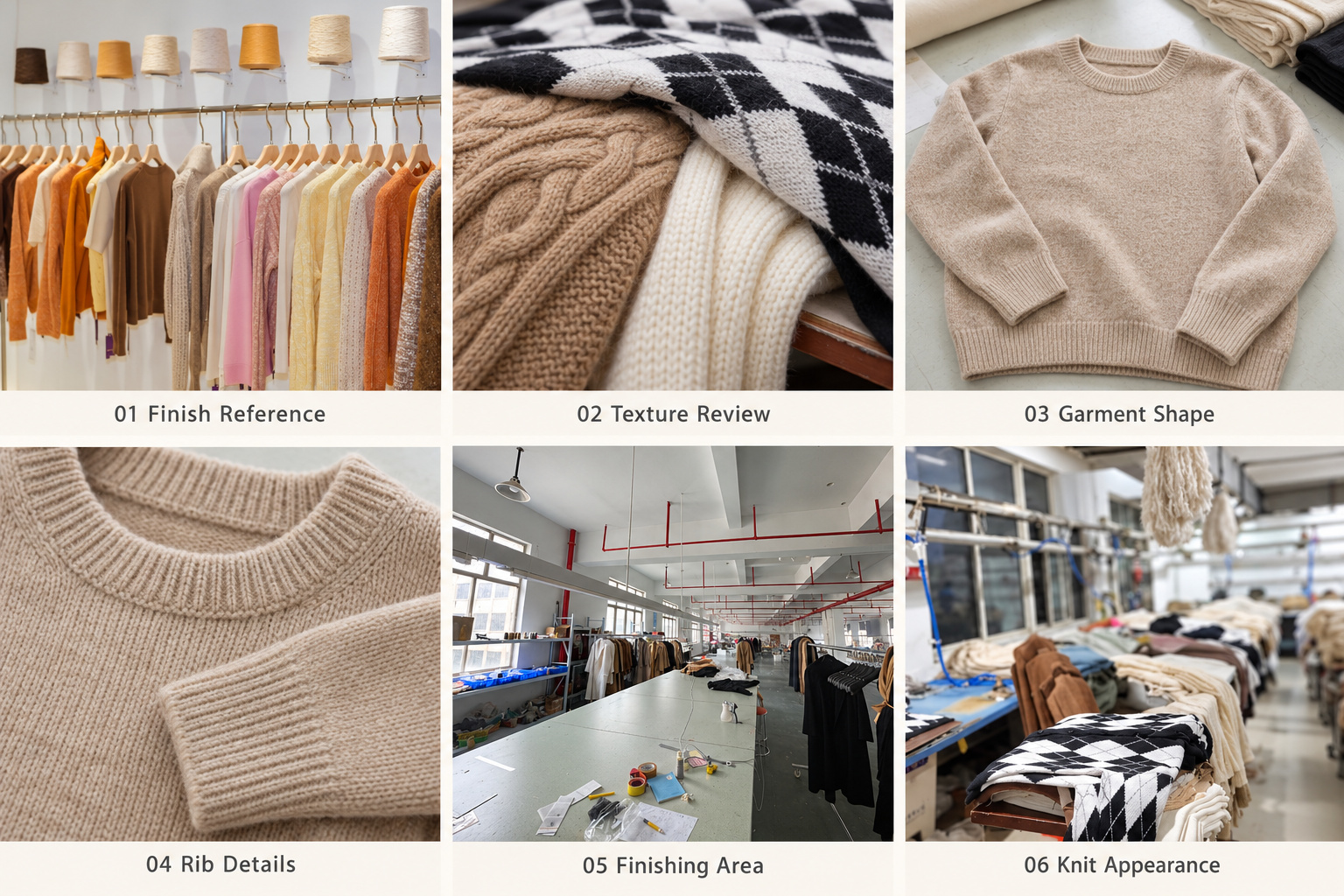 Control Shape During Drying and Pressing
Drying and pressing need to support the approved garment shape without unnecessary stretching or flattening. Excessive handling can distort openings, extend sleeves or reduce the definition of textured stitches.
For cables and raised patterns, finishing should preserve the intended surface character. Necklines, cuffs and hems also need attention so they remain balanced with the body.
Zippers, buttons and other attachments must be considered when setting the treatment. Their compatibility with washing, heat and handling is reviewed against the agreed component specification.
Inspect Finished Measurements and Appearance
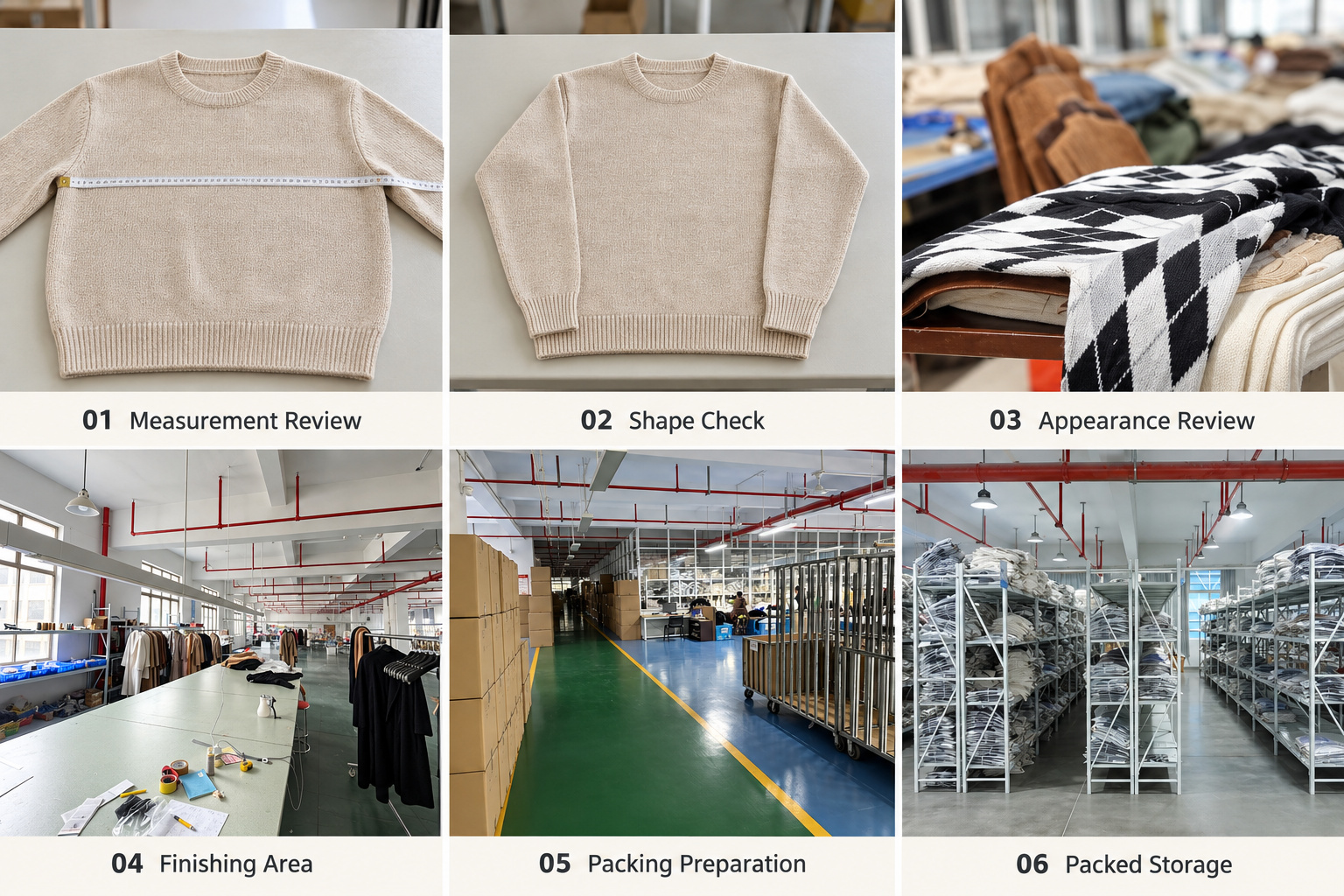
Finished garments are assessed against the approved sample and measurement sheet. Checks focus on key dimensions, symmetry, shade consistency, surface condition and visible distortion.
We also review collar shape, cuff matching, hem alignment and seam appearance. Any garment requiring rework needs another check before packing.
Our measurement and appearance checking uses the agreed measurement points and tolerances. Specific shrinkage, colorfastness or pilling tests require a separately confirmed method and scope; appearance checks alone do not establish those results.
 Plan Bulk Finishing and Packing Requirements
Bulk finishing follows the confirmed sample reference. Changes to the requested softness, dimensions or appearance after approval may require further review and affect the schedule.
Garments need to be appropriately dry and checked before individual packing. Folding arrangements should protect neckline shape, textured surfaces and attached trims during storage and shipment.
For a quotation, provide your yarn specification, garment reference, preferred hand feel, finished measurements, order quantities and delivery target. Include any required testing, care instructions and packing details so finishing can be planned as part of the complete OEM production schedule.