


Confirm Assembly Requirements Before Production
Panel linking and sewing bring knitted body sections, sleeves and trims together into a complete sweater. For apparel brands, private label buyers and wholesale importers, this stage affects garment fit, seam appearance and how the finished product holds its shape.
We review the approved sample alongside the construction instructions before assembly. Shoulder seams, armholes, side seams and neckline attachments need clear requirements. Cardigans and zip styles also require confirmation of opening edges and the components attached during later operations.
A reference garment helps communicate the intended finish, but any differences from the technical pack must be resolved before bulk work begins.
Match the Joining Method to the Knit Construction
Linking connects compatible knitted edges by aligning their loops. Sewing may be used for other seams, attachments or construction details where appropriate. The method depends on the panel structure, yarn, gauge and required appearance.
The joining yarn or thread must suit the garment. Its shade, thickness and behavior should work with the knitted fabric without creating an unnecessarily bulky or tight seam.
Lightweight knits, substantial cables and stretch rib sections need different handling. Construction decisions are reviewed through samples rather than applying the same seam method to every style.
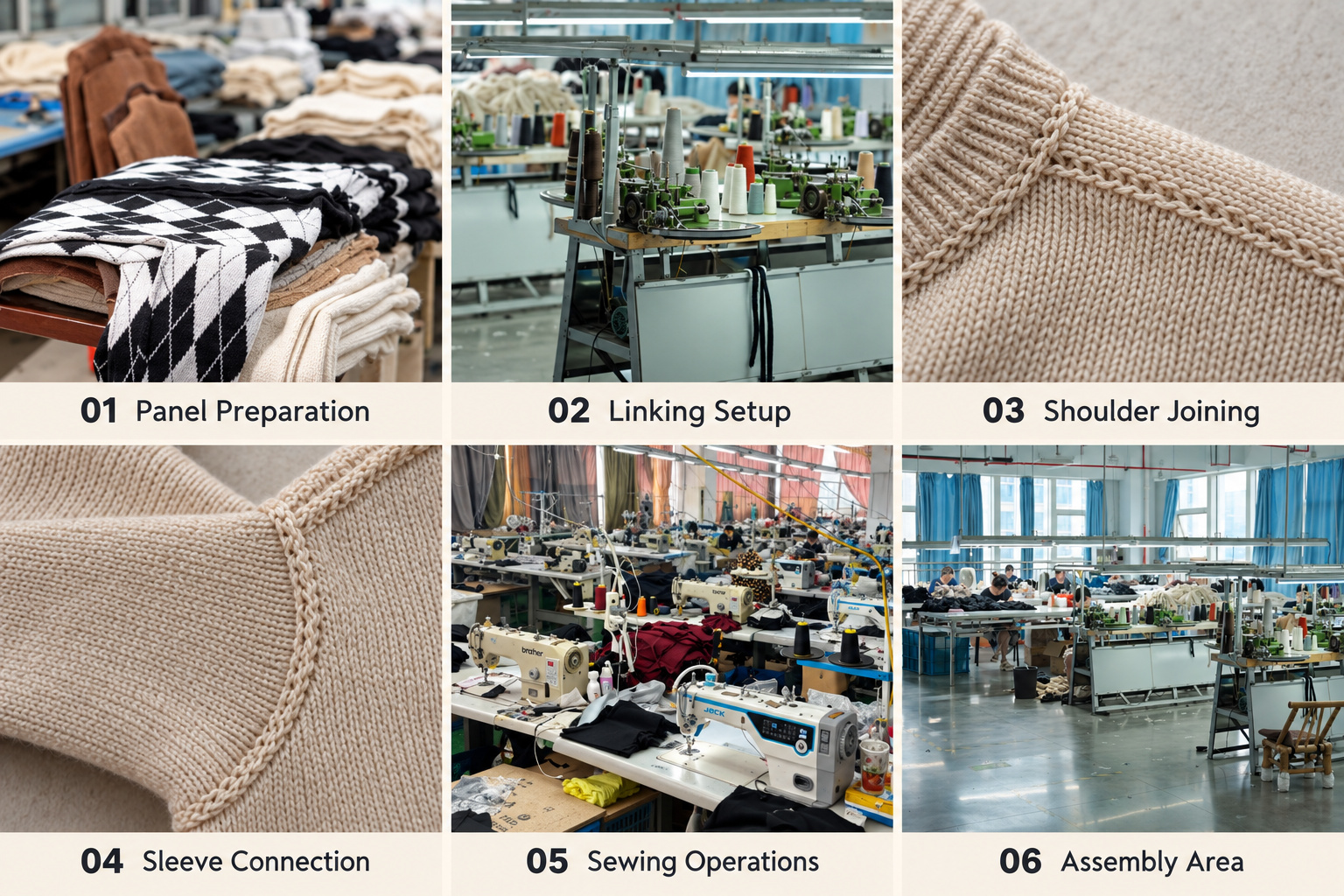 Keep Panels Organized and Edges Aligned
Before joining, panels need to remain identifiable by style, color, size and garment section. Mixing visually similar panels can cause fit differences or shade inconsistencies that become harder to correct after assembly.
The knitting process establishes panel shapes and edge construction. During joining, we review whether corresponding edges align without unintended stretching, gathering or distortion.
For striped and patterned sweaters, matching requirements must be defined in advance. Alignment at side seams, shoulders and sleeve connections depends on both the knitted panel design and assembly accuracy.
Control Neckline, Shoulder and Sleeve Connections
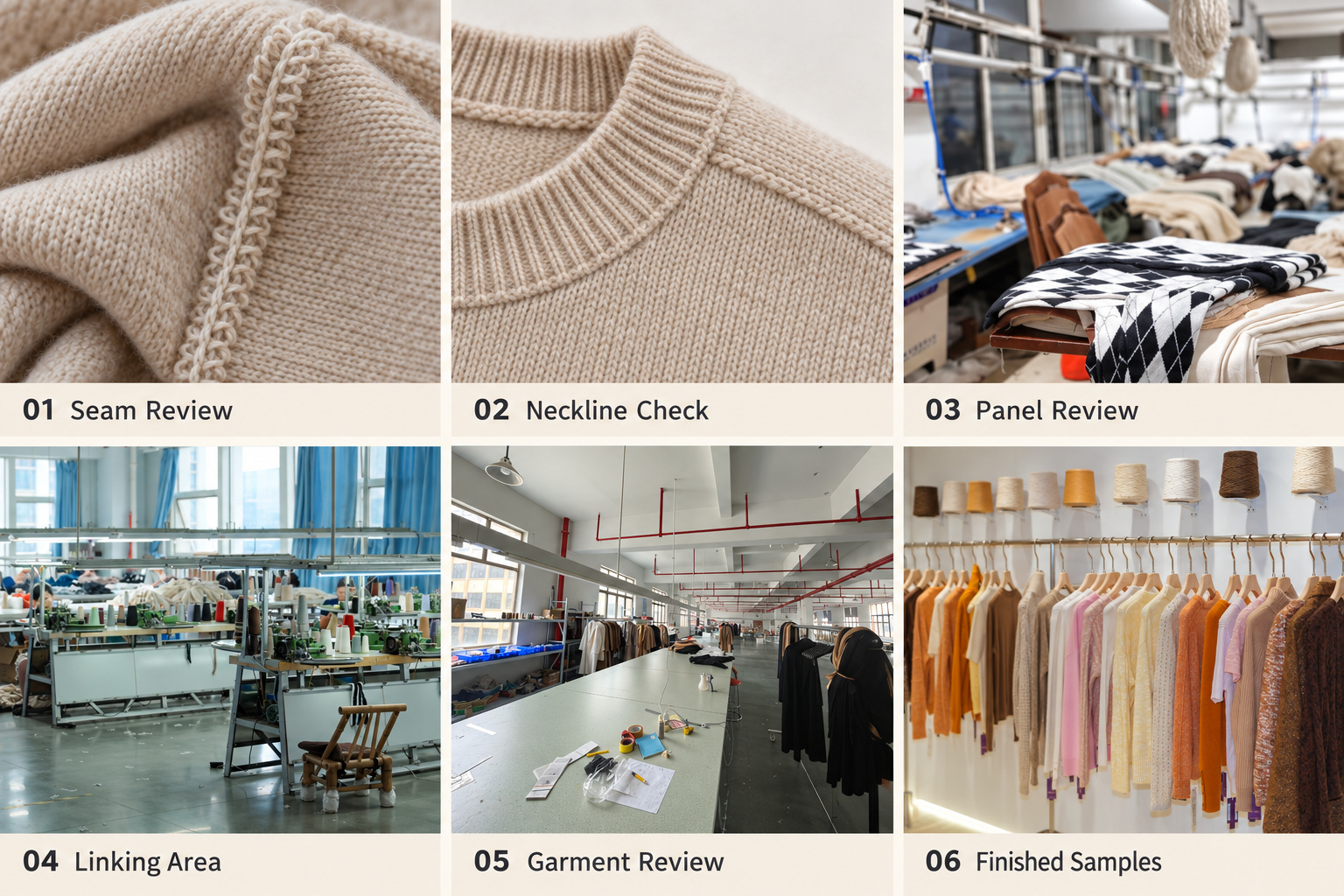
Neckline attachment affects the opening shape and how the collar sits. Uneven joining or excessive tension can pull the neckline out of shape, while loose attachment may leave visible gaps.
Shoulder and armhole seams also require attention. The assembled garment should follow the approved silhouette without twisting sleeves or creating unwanted puckering.
Details such as collar joins, rib attachment and opening edges are reviewed against the sample. Related collar, cuff and hem finishing requirements should remain consistent with the confirmed construction.
Check Seam Appearance and Finished Fit
Assembly checks focus on missed loops, open seams, loose ends, uneven stitching and visible distortion. Where relevant, we also review joining-thread shade and pattern alignment.
Measurements are checked at the appropriate production stage. The final assessment must account for the agreed washing and finishing treatment, since the garment can change shape or dimensions afterward.
Our measurement and appearance checking work compares the finished garment with the approved specification. Any repairs should be reviewed again before the garment progresses to packing.
 Provide Construction Details for a Quotation
Send your technical pack or reference sample, yarn direction, garment measurements, quantities by style and color, and any essential seam or pattern-matching requirements. Include collar construction, opening details and branding attachments that affect assembly.
Cost and timing depend on the knit structure, joining complexity, number of operations and order quantity. Changes to neckline shape or seam construction after sampling may require another assembly sample.
Before bulk approval, we confirm the construction reference together with finishing, inspection and packing requirements so the complete order follows one agreed specification.