


Turn Design References into Knittable Patterns
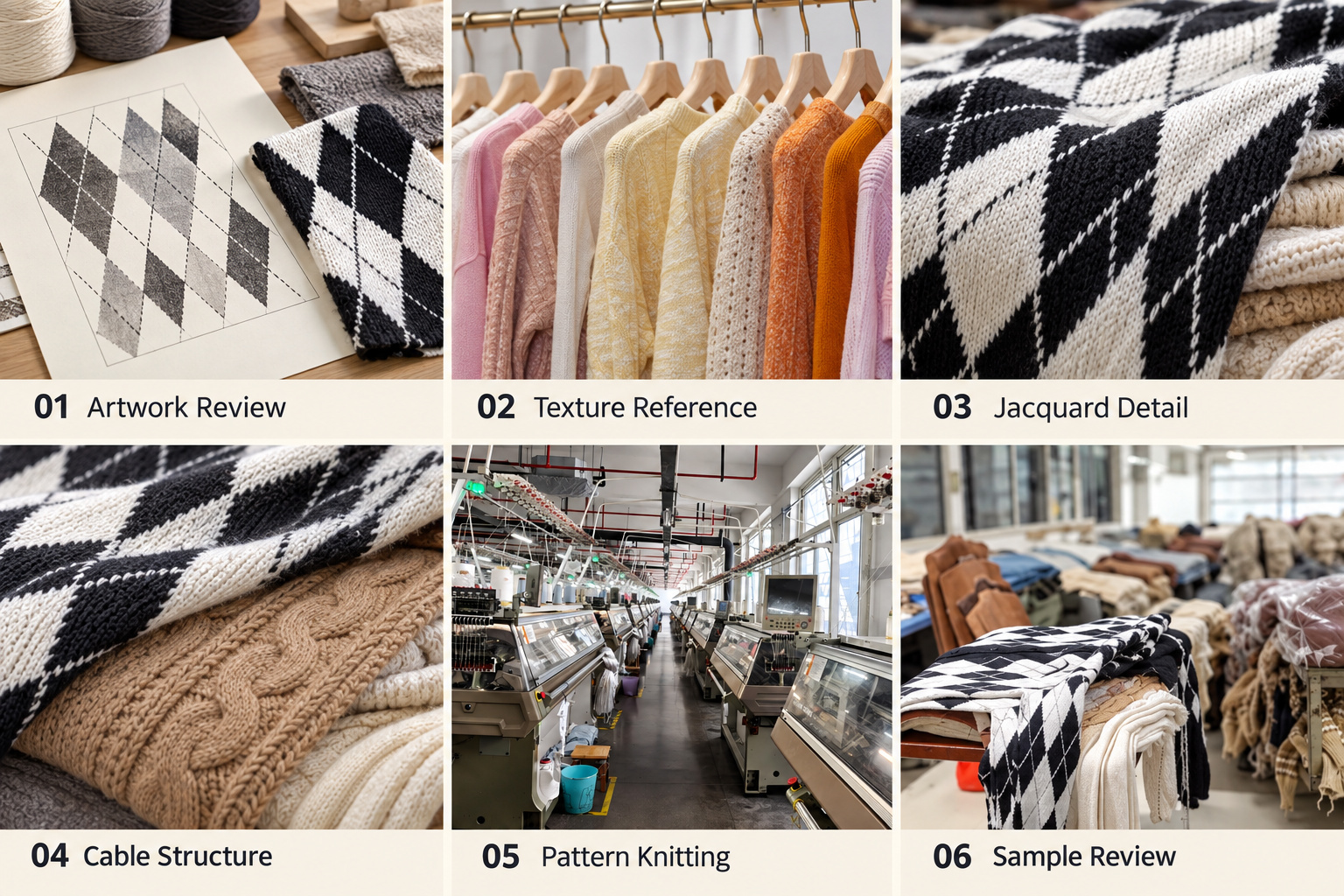
Knit pattern development translates your artwork or reference garment into a construction that can be sampled and repeated in sweater production. We work with apparel brands, private label buyers and wholesale importers developing stripes, jacquard, intarsia, cables and textured knit designs.
To begin, provide the pattern artwork, intended garment style, approximate motif size, placement and color direction. A reference sample is useful for communicating texture and proportion. If the drawing and reference differ, those differences need clarification before development.
The first review identifies which details can be reproduced and which may need adjustment for the selected yarn and gauge.
Select the Structure Behind the Design
The knitting method affects appearance, garment weight, stretch and production time. Jacquard and intarsia create different reverse-side constructions, while cables and textured stitches can change panel width and surface depth.
We review the pattern alongside the proposed yarn and garment specification. Fine lines, small lettering and closely spaced details may lose definition when converted into stitches. Adding colors or increasing pattern density can also affect yarn consumption and knitting time.
Our knit structure and detail customization work helps establish a construction suited to the intended garment, rather than choosing a method from artwork alone.
 Develop a Knitted Reference
A knitted development sample allows the buyer to assess the actual pattern scale, color relationship and stitch definition. Digital artwork establishes direction, but it cannot fully show the effects of yarn texture or finishing.
Where relevant, the sample receives the intended finishing treatment before review. We then assess whether the pattern remains balanced and whether its construction affects the required measurements.
Comments should identify specific changes: wider stripes, a smaller repeat, clearer motif edges or a different color arrangement. Changes to yarn or gauge may require another knitted reference through sample development.
Confirm Placement Across Garment Panels
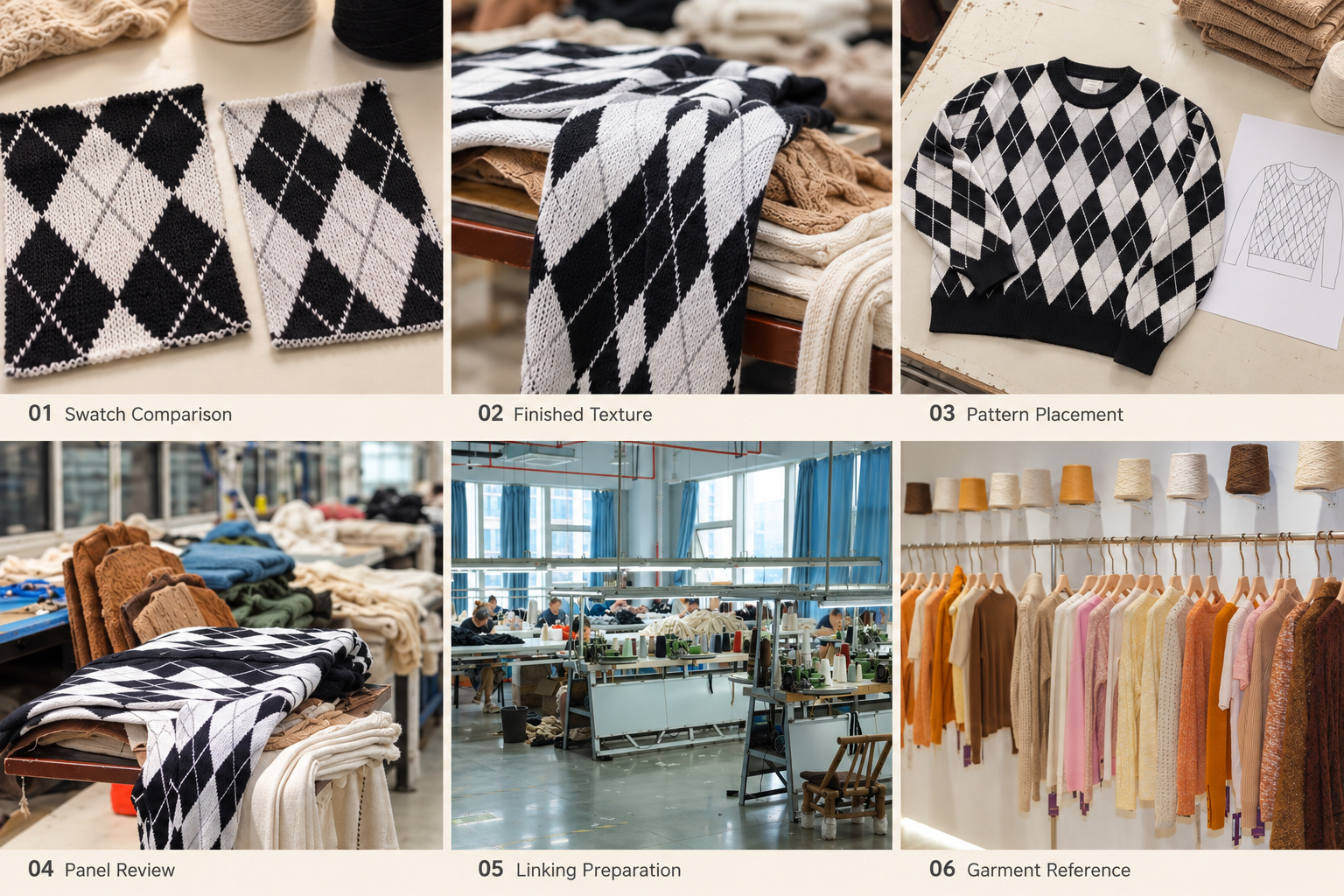
Pattern placement needs to work with the neckline, shoulders, armholes, sleeves and hem. A motif centered on a flat drawing may appear differently once the panels are shaped and assembled.
We review alignment requirements for adjoining sections, including stripe matching and the relationship between body and sleeve patterns. For cardigans, the front opening and placket must also be considered.
Size grading requires a clear decision about whether the motif stays the same size or changes across sizes. Edge cropping and repeat placement may vary with panel width, so these expectations should be confirmed before bulk knitting.
Establish the Bulk Production Reference
The approved pattern reference should identify the latest artwork version, yarn direction, colors, repeat arrangement and placement requirements. It must remain consistent with the approved garment sample.
Early production panels are compared with this reference for visible pattern errors, missing stitches, color sequence and alignment. The knitting process then follows the confirmed construction.
Any later pattern revision needs review before implementation. A seemingly small change can affect panel dimensions, material usage or the relationship between adjoining sections.
 Provide the Details Needed for a Quotation
Send clear artwork or reference photographs, garment measurements, preferred yarn, color count, pattern dimensions and quantities by style and color. Include your target delivery date and indicate any alignment requirements that are essential to the design.
Development cost and timing depend on pattern complexity, construction, material availability and the number of revisions. MOQ is reviewed alongside yarn purchasing requirements and the complete garment specification.
Pattern approval should take place before bulk production is released, with enough time for garment sampling, finishing checks, inspection and packing.