

Define the Construction for Your Sweater
Knitvella Sweater supports apparel brands, private-label buyers, importers and wholesalers with knit structure and detail development for OEM orders. Projects can include plain-knit bodies, rib structures, cable textures, patterned panels and style-specific neckline, cuff, hem or placket details.
Development begins with a technical pack, reference garment, photographs or knitted swatches. We review the required texture, garment proportions and construction alongside the material and quantity. The aim is to establish details that can be sampled, approved and consistently reproduced in bulk.
Match the Structure to Yarn and Gauge
A stitch reference needs to be assessed with the intended yarn. Yarn thickness, fiber characteristics and knitted density influence texture, coverage, drape and garment weight. Changing the yarn while retaining the same visual reference may require construction adjustments.
Typical gauge planning covers 3G, 5G, 7G, 9G, 12G and 14G, subject to yarn suitability and machine configuration. Through yarn and material selection, we review the material direction before confirming the proposed structure. Gauge is a construction parameter rather than a quality ranking.
 Develop Rib and Cable Specifications
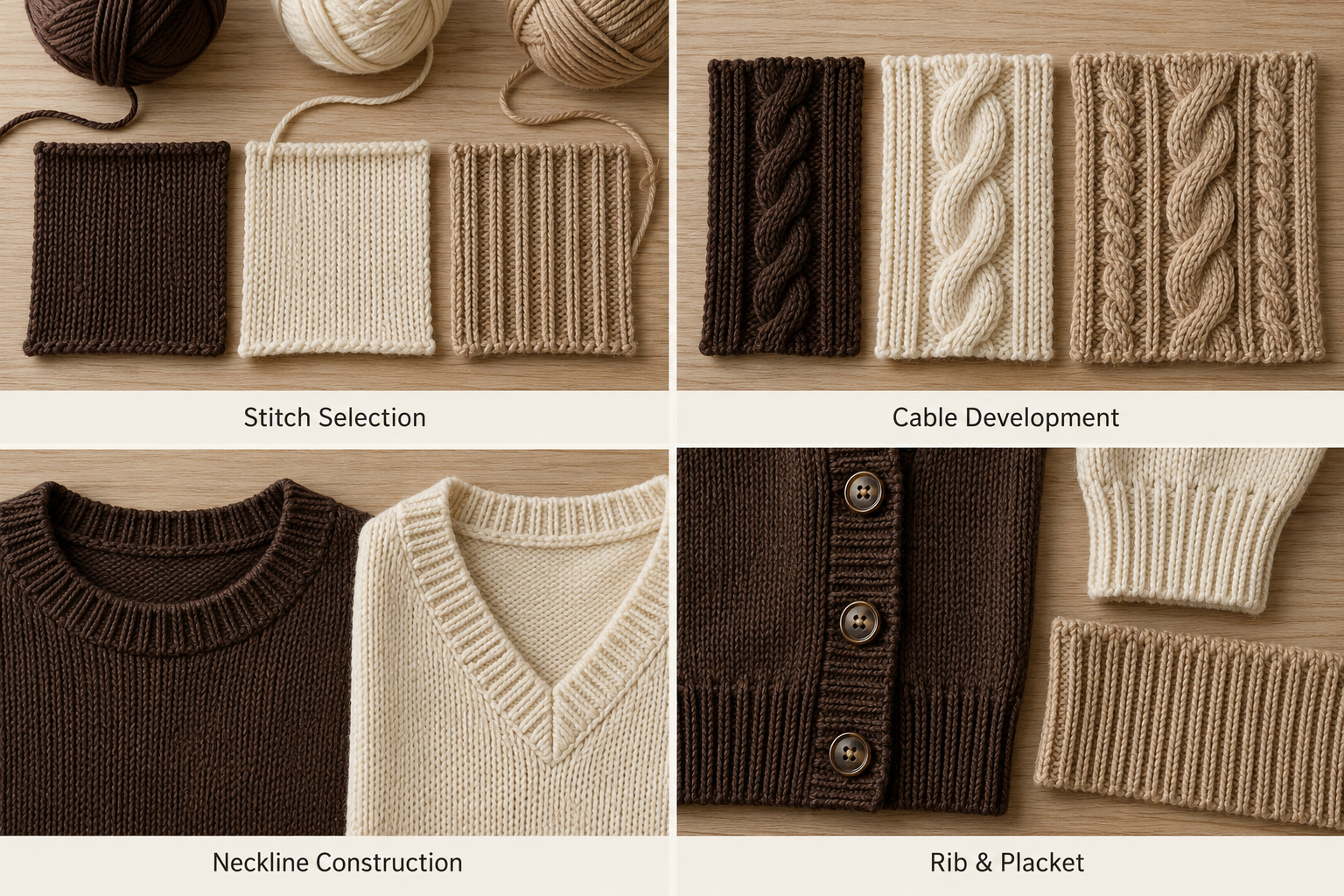
Rib details should define width, length, placement and the intended relationship with the garment body. A narrow neck rib, deep hem rib and fitted cuff have different construction needs. Appearance and recovery are reviewed on the relevant sample rather than assumed from a photograph.
Cable development requires agreement on cable width, repeat, spacing and panel placement. Dense or prominent structures can affect weight, dimensions and knitting time. Buyers should identify whether the reference texture must be closely matched or can be adapted to the selected yarn.
Confirm Necklines, Plackets and Connections
Crew-neck and V-neck styles require clear opening dimensions, rib proportions and joining details. Turtlenecks also need a defined height, width and intended folded or upright appearance.
For cardigans, the placket width, closure arrangement and front alignment should be established before sampling. Half-zip styles need collar dimensions and zipper specifications that work together. These details are reviewed alongside size and fit customization because construction changes can affect the finished silhouette and measurements.
Approve Swatches and Garment Samples
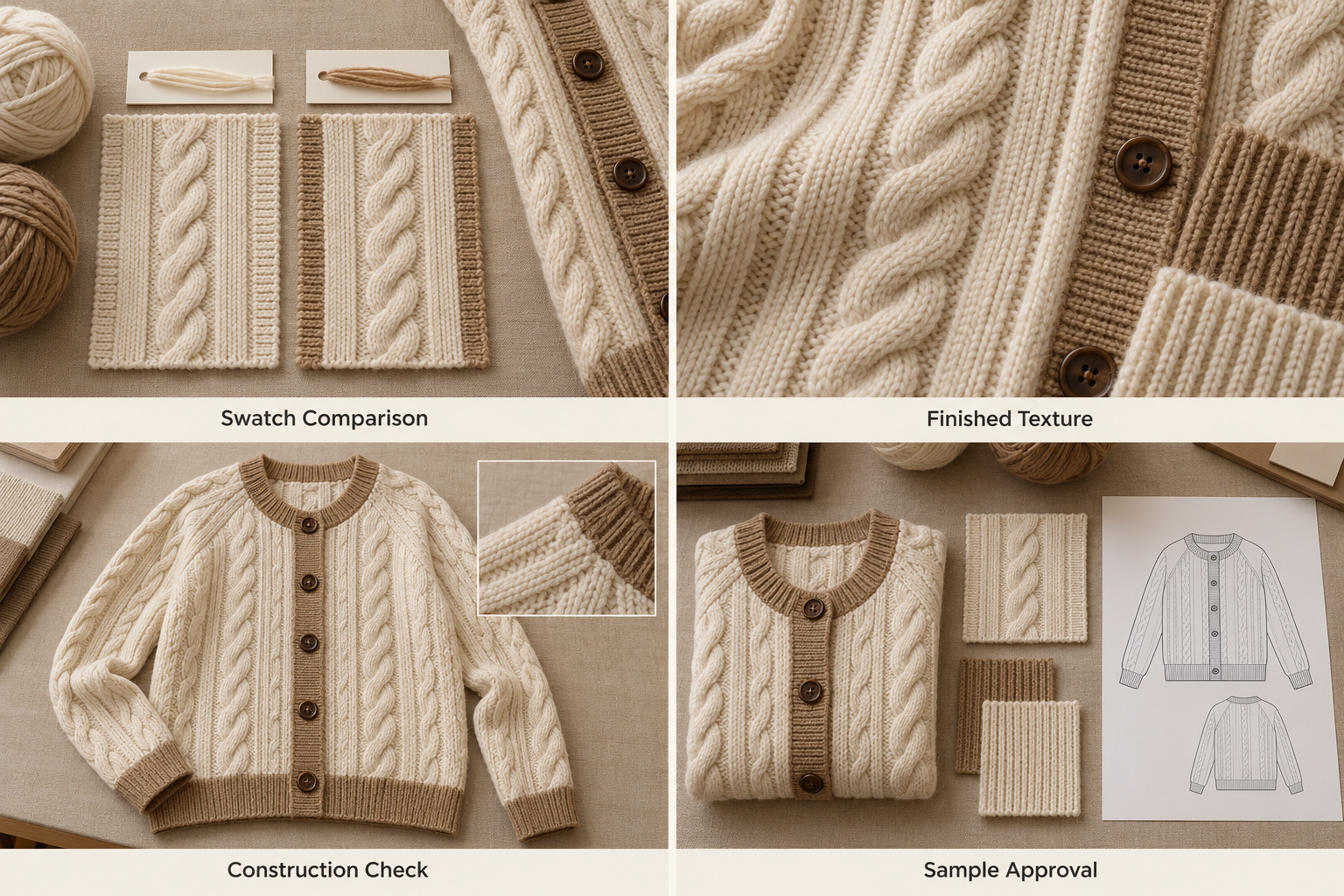
A knitted swatch helps assess stitch definition and texture before a full garment is developed. Garment review then checks how the structure behaves at necklines, seams, cuffs and hems after the intended finishing process.
Standard custom samples typically require about 7–12 days; more involved construction or yarn development may take around 10–15 days. During sample development, comments should identify the specific stitch, dimension or connection requiring adjustment. Approved revisions are recorded in the production specification.
 Review Cost and Bulk Production Requirements
Stitch complexity, garment weight, pattern placement and assembly details affect material use and production time. Standard OEM MOQ is typically around 300–500 pieces per style and color. Special yarn or complex construction may require higher quantities and additional scheduling.
Bulk checks compare stitch appearance, panel dimensions, linking, rib details and finished shape with the approved reference. Packaging requirements should also consider the finished garment’s thickness and folding arrangement. Changes after programming or knitting begins require review for their effect on cost and delivery.
Send Your Knit Detail References
Please provide close-up photographs or swatches, yarn requirements, gauge if known, garment drawings, measurements and quantity breakdown. Include the desired shipment date so we can review construction feasibility, sampling and bulk planning.