

Establish the Fit for Your Sweater Program
Knitvella Sweater supports apparel brands, private-label buyers, importers and wholesalers with size and fit development for OEM sweaters. Projects can cover crew-neck pullovers, cardigans, turtlenecks, V-neck styles, cable knits and half-zip sweaters.
Development begins with the intended silhouette, sample size, measurement chart and size range. Regular, relaxed, oversized or cropped descriptions help communicate direction, but they need defined measurements. We review body proportions, neckline construction and sleeve shape alongside the yarn and knit structure before sampling.
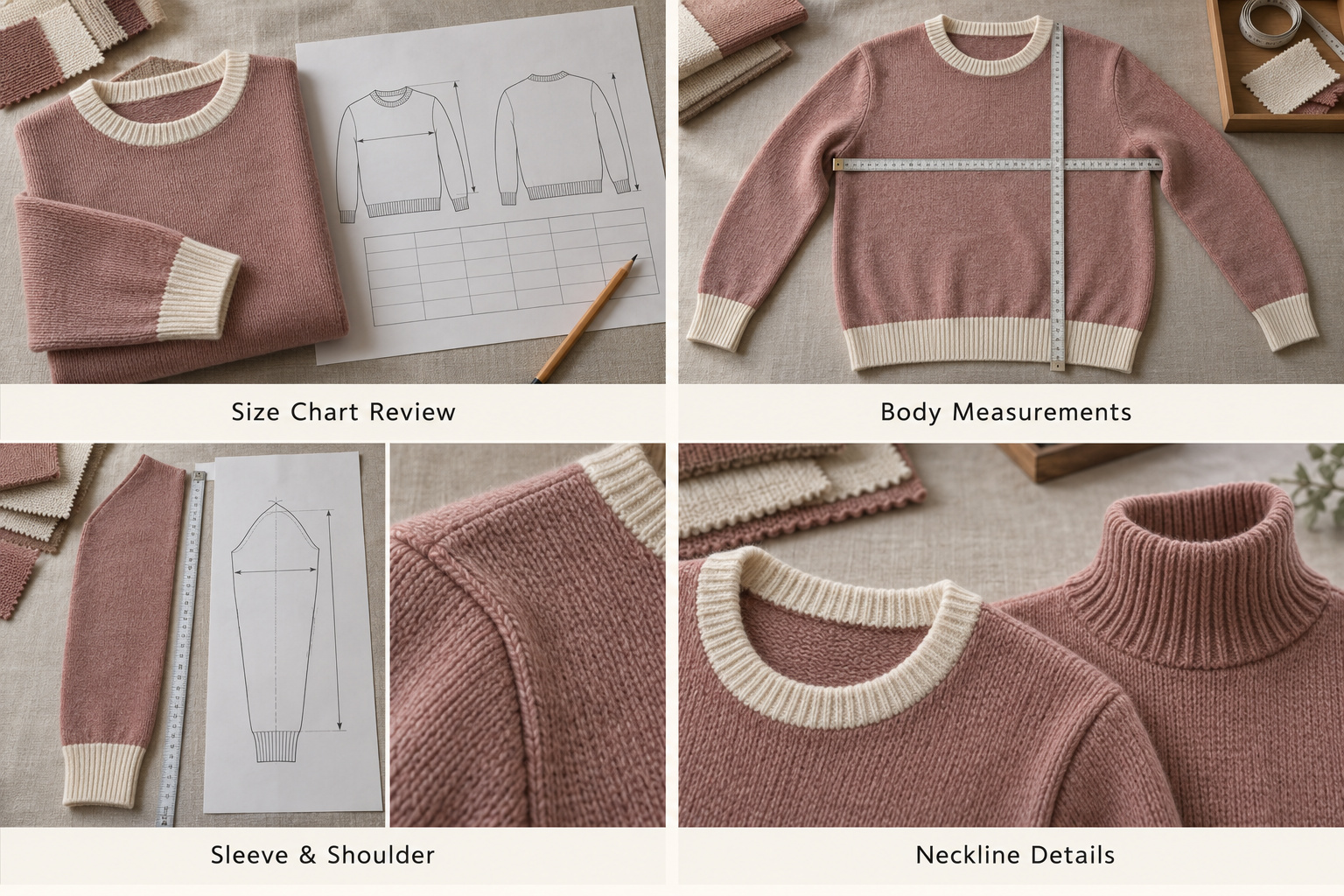
Provide Clear Measuring Points
A usable size chart should explain where and how each measurement is taken. Chest width, body length, shoulder width, sleeve length, armhole depth and neckline dimensions need consistent measuring points.
Buyers should identify whether dimensions are measured flat or around the garment and specify units. Reference photographs with marked measuring points help resolve uncertainty. Through sweater design development, we connect these measurements with the proposed construction rather than relying on size labels alone.
 Match Measurements to Knit Behavior
Sweater dimensions depend on more than the measurement chart. Yarn, gauge, stitch structure and rib construction influence stretch, drape and the way the garment settles after finishing.
A cable-knit body may behave differently from a plain-knit body made with another yarn. Neck ribs, cuffs and hems also need proportions that suit the garment. Our knit structure and detail customization review considers these relationships before confirming the sample specification. Measurements should be assessed in the agreed finished condition without stretching the garment to reach a target.
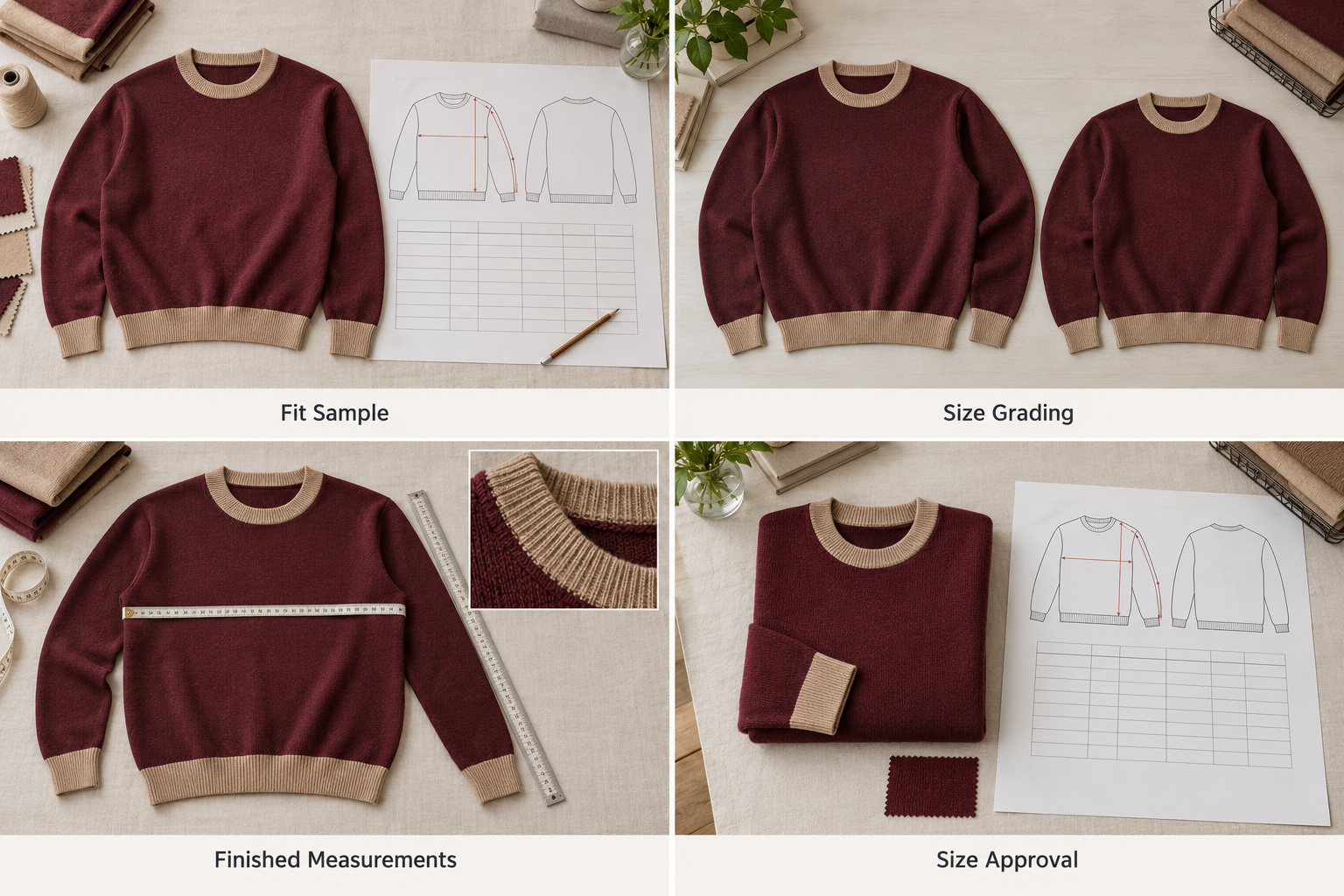
Develop Grading Across the Size Range
Size grading requires agreed changes between sizes. Increasing every measurement by the same amount can alter neckline proportions, sleeve shape or garment balance.
Buyers can provide their established grading rules or submit the intended size range for review. Cardigan plackets, turtleneck height and half-zip collars need particular attention. For patterned styles, size changes may also affect artwork placement or pattern repeats. Any additional size samples required for approval should be agreed during development.
Review Fit Samples and Record Changes
Standard custom samples typically require about 7–12 days. More involved material or construction development may take around 10–15 days, depending on project requirements.
During sample development, buyers review finished measurements and assess the intended fit. Comments should identify the measuring point, requested change and any related construction adjustment. Revised measurements are consolidated into one current chart so the approved sample and written specification remain aligned.
 Control Finished Sizes in Bulk Production
Bulk measurement requirements should include the approved measuring method and agreed tolerances for relevant points. One tolerance should not be assumed suitable for every dimension or construction.
Checks after washing and finishing assess dimensions together with garment shape, symmetry and rib appearance. Size labels and packing assortments are then checked against the order breakdown. Size range, additional sample requirements and construction changes can affect costing and scheduling; these should be confirmed before bulk approval.
Send Your Size and Fit Requirements
Please provide your measurement chart, measuring-point diagrams, sample size, grading rules, quantity by size and reference garment if available. Include material details and the target shipment date so we can review sampling and production requirements.