

Define the Color and Pattern Brief
Knitvella Sweater supports apparel brands, private-label buyers, importers and wholesalers with color and pattern development for OEM sweaters. Projects can include solid colors, stripes, jacquard, intarsia and seasonal knitwear designs.
Development starts with the artwork, color references, sweater construction and quantity by style and color. We review how the design will work with the proposed yarn and gauge before sampling. This establishes which details can be reproduced directly and which need adjustment for the knitted structure.
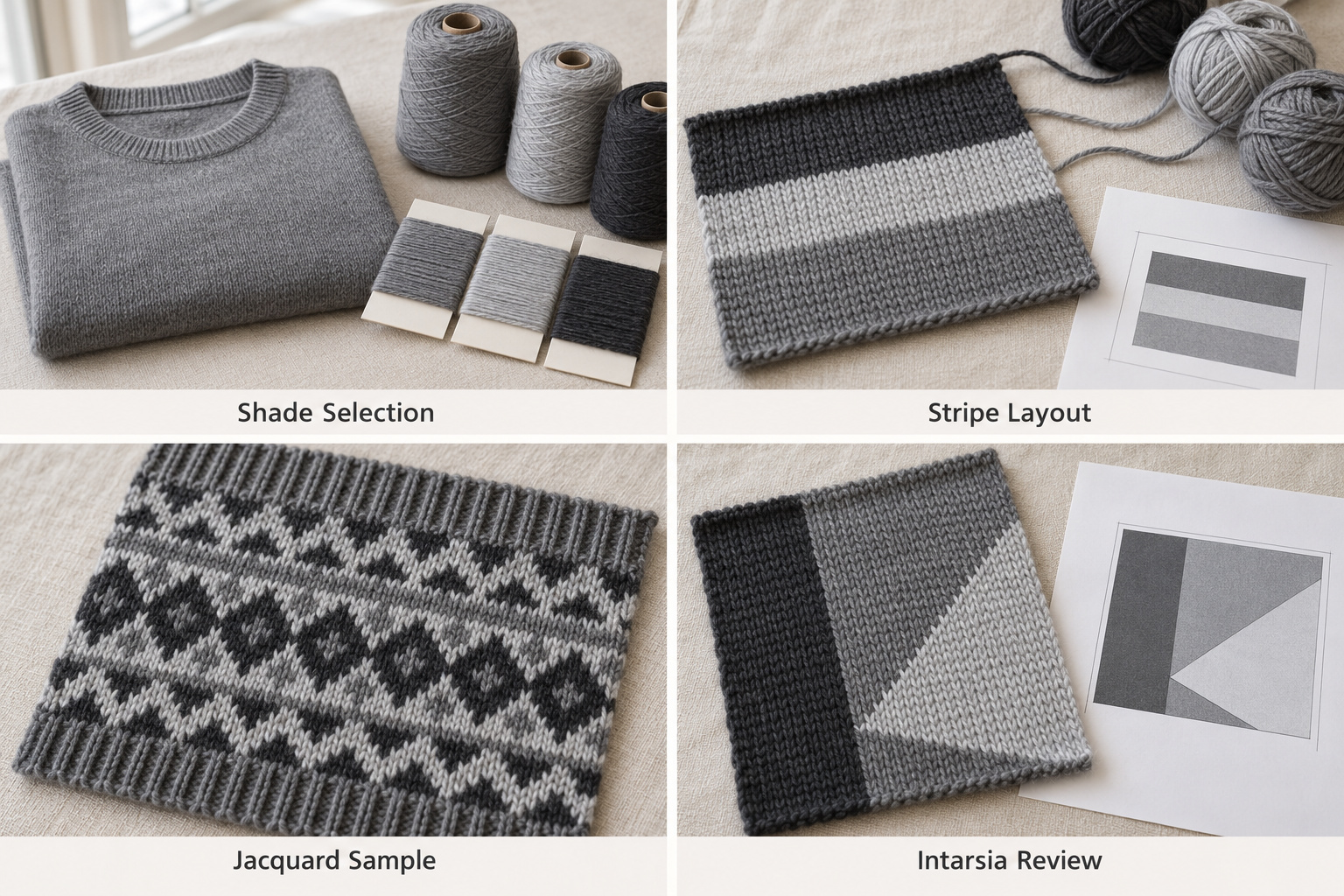
Choose Available Shades or Custom-Dyed Yarn
Available yarn shades can simplify sourcing and production planning. Buyers can review suitable options against a physical color reference or agreed color code. Screen images help communicate direction, but they should not be the sole basis for final shade approval.
Custom-dyed yarn may involve a separate yarn minimum, additional cost and longer preparation. The required composition and estimated consumption need review before confirming this option. Our yarn and material selection process connects color requirements with material availability and the intended garment.
 Confirm Stripe Width and Color Sequence
Striped sweaters require more than a list of colors. The specification should define stripe width, repeat sequence, starting position and the treatment of the neckline, cuffs and hem.
Buyers should also confirm whether stripes need to align across the body, sleeves or cardigan front. Placement may require review across different sizes because garment dimensions change. A knitted sample helps assess the balance of the design and identify alignment requirements before bulk approval.
Translate Artwork into Jacquard or Intarsia
Pattern development requires clear artwork, the intended dimensions, color arrangement and placement. Fine lines, small lettering and detailed graphics may need simplification to remain recognizable in the selected knit construction.
Jacquard and intarsia should be reviewed against the design rather than treated as interchangeable options. Color count, repeat size, reverse-side construction and garment weight can affect the result. Through knit structure and detail customization, we assess the proposed technique and prepare a workable development direction.
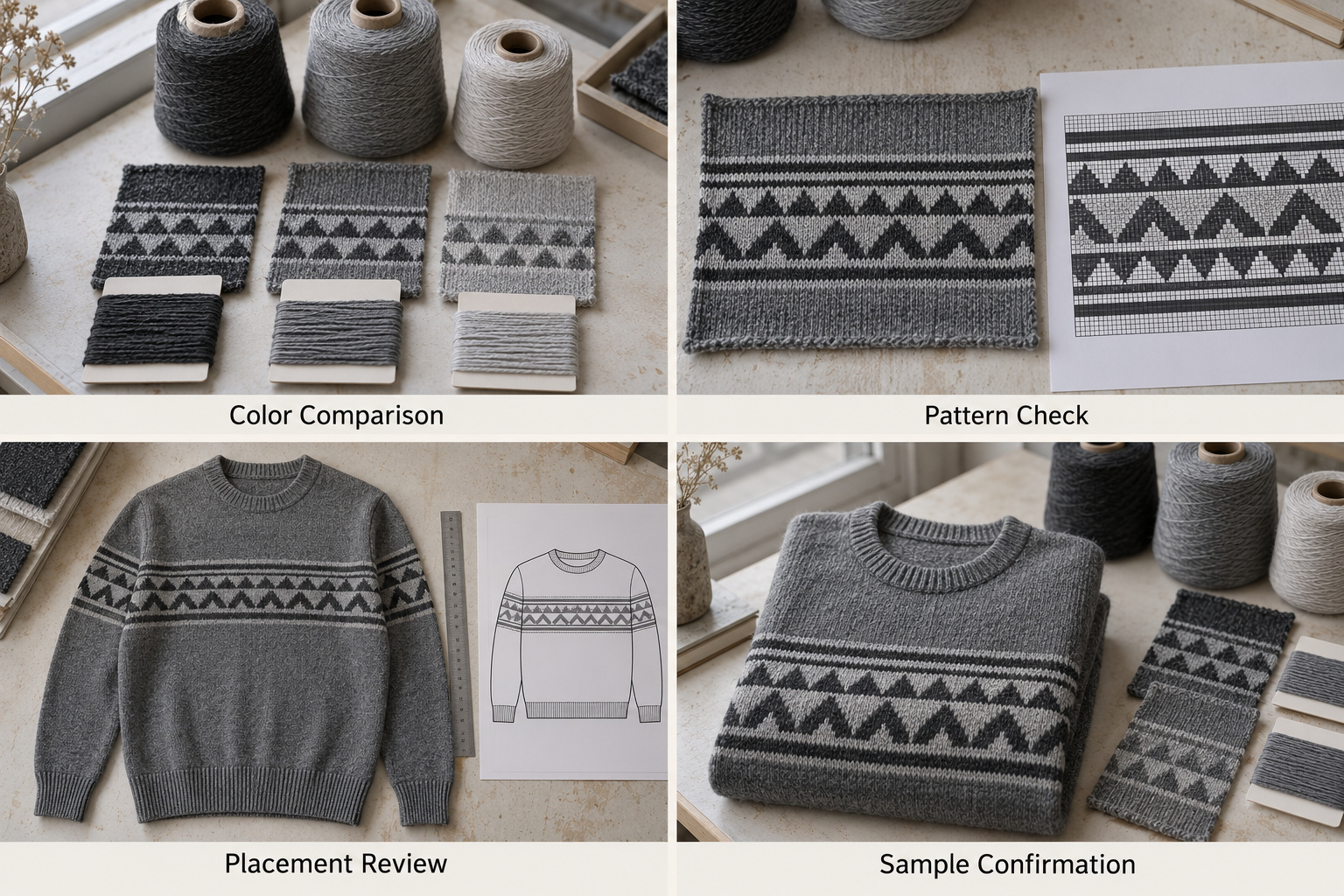
Approve Knitted Samples Before Production
A printed artwork sheet cannot fully represent the texture or appearance of a knitted pattern. Buyers should review the relevant swatch or garment sample for shade, pattern clarity, scale and placement after the intended finishing process.
Standard custom samples usually require about 7–12 days. More involved yarn or pattern development generally takes around 10–15 days, subject to project requirements. During sample development, revisions are recorded and the approved artwork, colors and sample are brought into one agreed production reference.
 Plan MOQ and Bulk Consistency
Standard OEM MOQ is typically around 300–500 pieces per style and color. Custom-dyed yarn, complex jacquard or intarsia may require 500–1,000 pieces or more, depending on material and construction requirements.
Bulk checks cover yarn shade, color sequence, pattern structure and placement against the approved reference. Changes after yarn preparation or knitting begins are reviewed for their effect on cost and delivery. Seasonal programs should allow time for artwork revisions, color approval, packing and shipment preparation.
Send Your Color and Artwork Requirements
Please provide artwork, color references, pattern dimensions, placement instructions, sweater specifications and quantity breakdown. Include any requirements for color names on labels or packaging, along with the target shipment date, so we can review sampling and production feasibility.