

Build a Clear Brief for OEM Development
Knitvella Sweater supports apparel brands, private-label buyers, importers and wholesalers with sweater design development. Projects can begin from a technical pack, drawing, reference photographs or a physical garment.
The first task is to turn the proposed design into usable development instructions. We review silhouette, neckline, sleeves, rib details, knit construction, measurements and branding alongside the intended material, quantity and shipment date. Open details are identified before sampling so buyers understand what still needs confirmation.
Define What the Reference Should Communicate
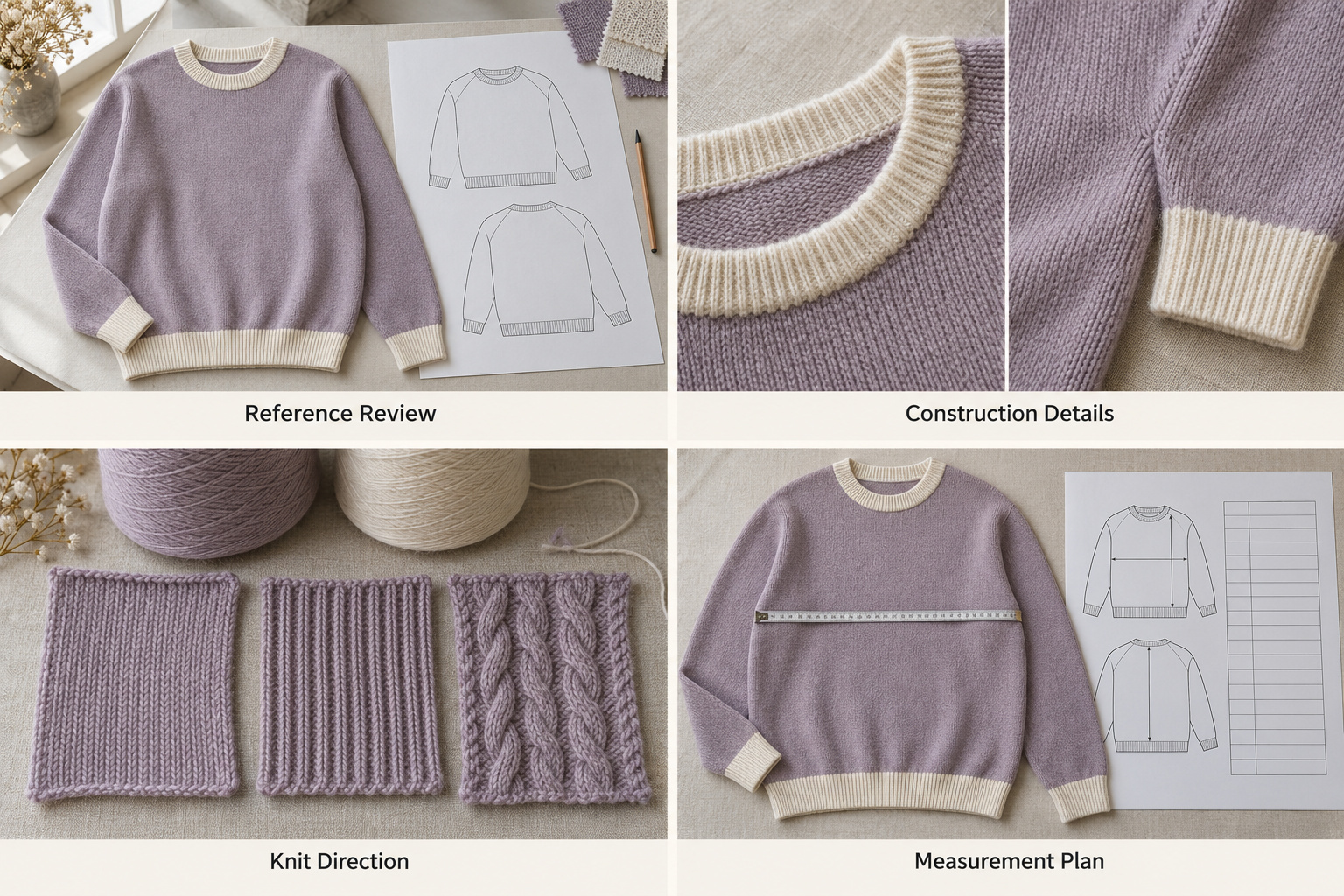
A photograph can show the overall appearance, but it may not reveal yarn composition, garment weight, back construction or finished measurements. Multiple views and close-up images help clarify these details. A physical reference is useful for discussing hand feel and construction, while a measurement chart establishes the intended fit.
When adapting a reference, identify which elements should be retained and which should change. For example, a buyer may retain the body shape while adjusting the neckline, sleeve length or rib width. These changes should be recorded together rather than spread across separate messages.
 Translate Style Details into Knit Construction
A sweater design needs to work with the selected yarn and gauge. Cable width, rib structure, pattern repeats and neckline shaping can change the appearance, weight and dimensions of the garment.
During knit structure and detail customization, we review how these elements connect. Cardigans also require a defined placket and closure arrangement; half-zip styles need collar dimensions and zipper specifications. Where the material is undecided, buyers can provide a composition or hand-feel direction for review before the construction is finalized.
Establish Measurements and Artwork
The development brief should include the sample size, key measuring points and intended fit. Body length, chest width, shoulder position, sleeve length and neckline dimensions need clear definitions. Size grading can then be reviewed through size and fit customization.
Jacquard, intarsia and embroidery require artwork with an agreed scale, placement and color arrangement. Fine lines or detailed graphics may need adjustment for the proposed technique. Labels, buttons and zippers should also be identified when they affect the construction or sample appearance.
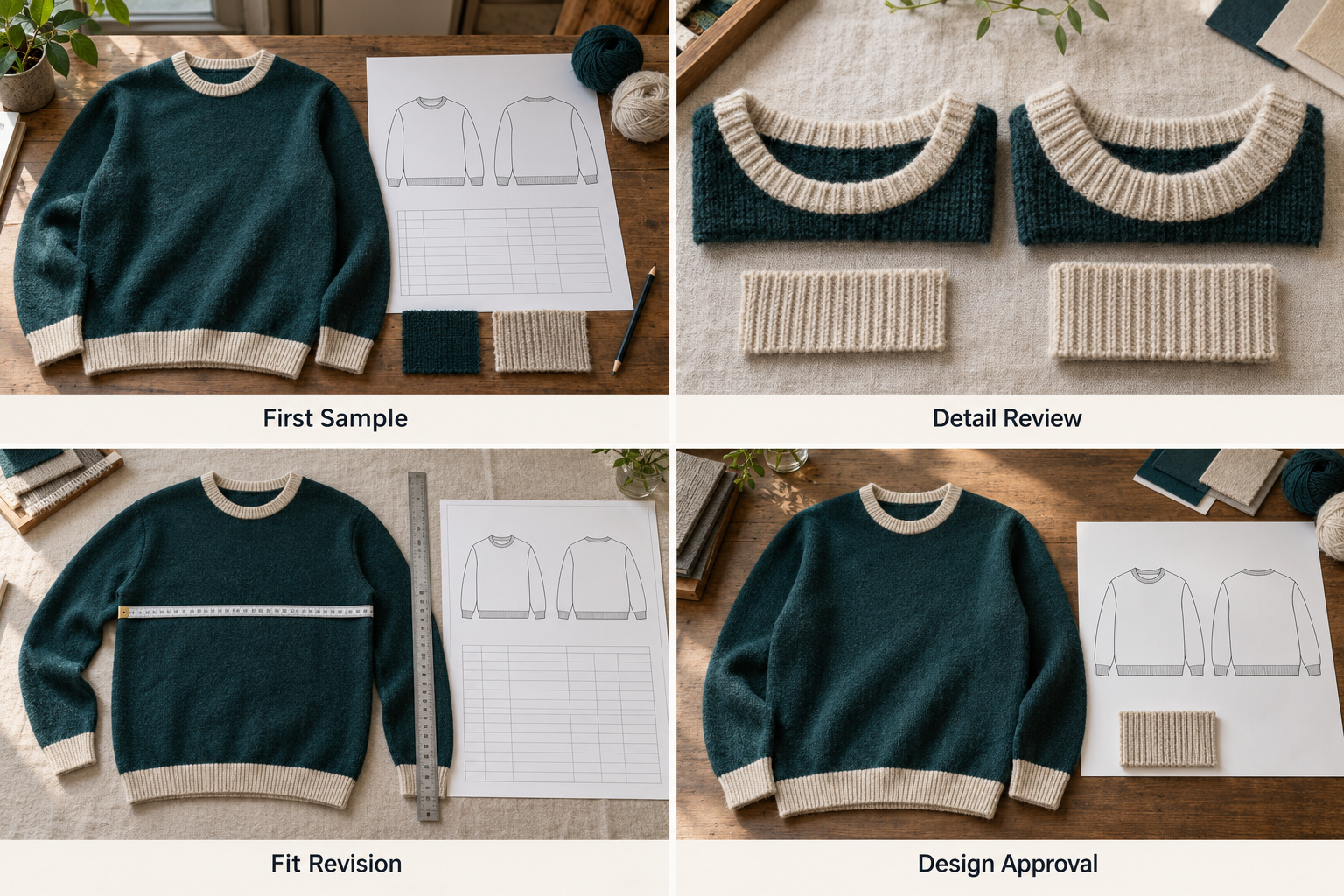
Review the Sample and Record Revisions
Standard custom samples typically require about 7–12 days. More involved yarn, pattern or construction development generally takes around 10–15 days, depending on the project.
During sample development, review comments should refer to specific measurements or marked photographs. Confirmed revisions are brought into one updated specification. The approved sample and documents then provide the reference for bulk production, including finished appearance, measurements, trims and branding.
 Review Cost and Production Implications
Yarn choice, garment weight, stitch complexity, color count and special trims affect costing and development time. Standard OEM MOQ is typically around 300–500 pieces per style and color; special yarns or complex constructions may require higher quantities.
Changes after yarn preparation or knitting begins need a further review of material usage, cost and delivery. Packaging requirements should therefore be included in the brief before bulk approval.
Send Your Design for Review
Send your tech pack or references, measurement chart, material direction, artwork, quantity by style and color, packaging requirements and target shipment date. We can review missing details and technical feasibility before confirming sampling and quotation.